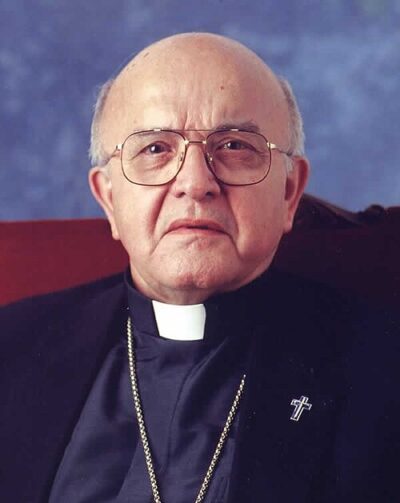
General Vicar of the Spanish Armies
General Vicar of the Spanish Armies is an office in the Spanish Army (1644-1986). It is an office of Spain.
All 9 facts, and where they come from
Facts
9 facts · 0 confirmed by two sources · 0 cited · 9 from one source
Where this comes from
Papalocal keeps its own record. It started from these sources; what each one said is kept here as it was copied, so a change on their side never changes this page by itself. Tap one to read its version.
What Wikidata says · copied November 19, 2026 · revision 2556194640
- Described as
- office in the Spanish Army (1644-1986)
- Other names
- Military Vicar of Spain, General Military Vicar of Spain, Vicario general Castrense de España, General Vicar of the Armies
- What it is
- historical ecclesiastical position; historical episcopal title · 1 reference
- Created
- 1644
- Ended
- July 21, 1986
- Country
- Spain
- Field
- Spanish Armed Forces; Spanish Navy; Spanish Army
- Office of
- Spain · 1 reference
- Wikipedias with a page
- 1
Wikidata item Q5532276 (wikidata.org/wiki/Q5532276), public domain (CC0). Copied 2026-11-19.
What Wikipedia says · copied November 19, 2026 · revision 1350491274
This is a list of the General Vicar of the Armies. They are Royal Chief Chaplains whose office is to serve the Spanish Armed Forces.
The office was first established in 1644 and is usually attached with the title Patriarch of the West Indies (except for the period of 1891–1920). It only at first existed in wartime period but was permanently established in 1762. Also it was abolished during the First and Second Spanish republican era (1873–1874, 1932–1937). The pastoral care for the Spanish armed forces is now, since 1986, provided by the Military Archbishopric of Spain.
From the Wikipedia article “General Vicar of the Armies” (en.wikipedia.org/wiki/General_Vicar_of_the_Armies), by its contributors, under CC BY-SA 4.0 (creativecommons.org/licenses/by-sa/4.0/). Copied 2026-11-19; not changed.
Confirmed Two sources agree. Cited One source, and it names where it got it. One source One source, without a reference of its own. Sources disagree The sources disagree. We show the best-supported value and keep theirs below.