Gentlemen Prefer Blondes
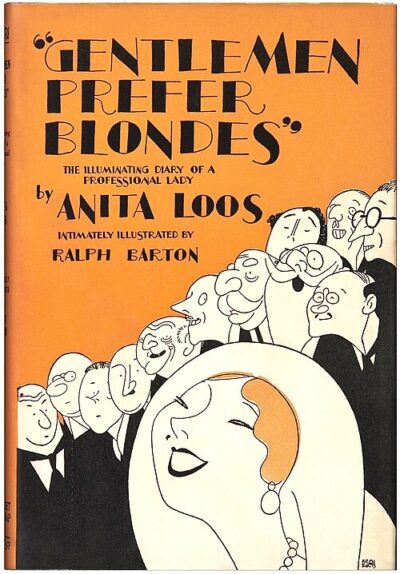
Gentlemen Prefer Blondes is a 1925 comic novel by Anita Loos.
- Published
- 1925
- Written by
- Anita Loos
- Genre
- epistolary novel
- Country of origin
- United States
All 9 facts, and where they come from
Facts
9 facts · 0 confirmed by two sources · 0 cited · 9 from one source
Where this comes from
Papalocal keeps its own record. It started from these sources; what each one said is kept here as it was copied, so a change on their side never changes this page by itself. Tap one to read its version.
What Wikidata says · copied November 17, 2026 · revision 2555901906
- Described as
- 1925 comic novel by Anita Loos
- What it is
- literary work
- Written by
- Anita Loos
- Publisher
- Boni & Liveright
- Genre
- epistolary novel; comic novel
- Published
- 1925 · 1 reference
- Language
- American English
- Country of origin
- United States
- Followed by
- But Gentlemen Marry Brunettes
- Wikipedias with a page
- 13
Wikidata item Q1248760 (wikidata.org/wiki/Q1248760), public domain (CC0). Copied 2026-11-17.
What Wikipedia says · copied November 17, 2026 · revision 1384669497
Gentlemen Prefer Blondes: The Intimate Diary of a Professional Lady is a 1925 comic novel written by American author Anita Loos. The story follows the dalliances of a young blonde gold-digger and flapper named Lorelei Lee during "the bathtub-gin era of American history." Published the same year as F. Scott Fitzgerald's The Great Gatsby and Carl Van Vechten's Firecrackers, the lighthearted work is one of several notable 1925 American novels focusing on the carefree hedonism of the Jazz Age.
Originally serialized as sketches in Harper's Bazaar during the spring and summer of 1925, Boni & Liveright republished Loos's sketches in book form in November 1925. Although dismissed by critics as "too light in texture to be very enduring", the book garnered the praise of many writers, including F. Scott Fitzgerald, James Joyce, William Faulkner, and H. G. Wells. Edith Wharton hailed Loos's satirical work as "the great American novel" as the character of Lorelei Lee embodied the avarice and self-indulgence that characterized 1920s America during the presidencies of Warren G. Harding and Calvin Coolidge.
Loos's book became the second-best selling title of 1926 in the United States and a runaway international bestseller. It was printed worldwide in over 13 languages, including Russian and Chinese. By the time Loos died of a heart attack in 1981 at the age of 93, the work had been printed in over 85 editions and adapted into a 1926 comic strip, a 1926 Broadway play, a 1928 silent comedy, a 1949 Broadway musical, and a 1953 film adaptation of the musical.
Loos wrote a sequel, But Gentlemen Marry Brunettes, in 1927.
From the Wikipedia article “Gentlemen Prefer Blondes (novel)” (en.wikipedia.org/wiki/Gentlemen_Prefer_Blondes_(novel)), by its contributors, under CC BY-SA 4.0 (creativecommons.org/licenses/by-sa/4.0/). Copied 2026-11-17; not changed.
Confirmed Two sources agree. Cited One source, and it names where it got it. One source One source, without a reference of its own. Sources disagree The sources disagree. We show the best-supported value and keep theirs below.
Picture: Ralph Barton, via Wikimedia Commons · Public domain