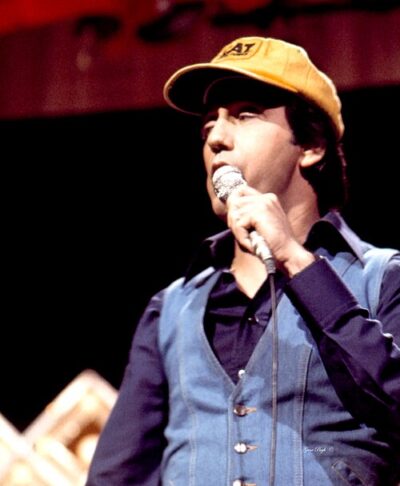
Gitarzan
Gitarzan is a 1969 single by Ray Stevens.
- Released
- January 6, 1969
- Performed by
- Ray Stevens
- Genre
- pop music
- Country of origin
- United States
All 7 facts, and where they come from
Facts
7 facts · 0 confirmed by two sources · 0 cited · 7 from one source
Where this comes from
Papalocal keeps its own record. It started from these sources; what each one said is kept here as it was copied, so a change on their side never changes this page by itself. Tap one to read its version.
What Wikidata says · copied November 19, 2026 · revision 2481329286
- Described as
- 1969 single by Ray Stevens
- What it is
- single
- Performed by
- Ray Stevens
- Genre
- pop music · 1 reference
- Released
- January 6, 1969
- Country of origin
- United States
- Followed by
- Along Came Jones
- Record label
- Monument Records
- Wikipedias with a page
- 2
Wikidata item Q5565070 (wikidata.org/wiki/Q5565070), public domain (CC0). Copied 2026-11-19.
What Wikipedia says · copied November 19, 2026 · revision 1349094891
"Gitarzan" is a novelty song released by Ray Stevens in 1969 about a character who lives in a jungle and forms a musical band with his female partner, Jane, and their pet monkey. The song features Tarzan's jungle calls, scat singing, and a funky boogie-woogie, a quote from the song "Swinging on a Star", with the line "Carrying moonbeams home in a jar" superimposed over an insistent G Major ostinato, and a melody from Martha and the Vandellas' "Honey Chile" in its chorus. The song reached #8 on the Billboard Hot 100 on 31 May 1969 and #10 in Canada in May 1969. It did best in New Zealand, where it reached #2. The music and lyrics were written by Stevens with a title and concept supplied by Bill Justis. Justis is officially credited as Bill Everette.
From the Wikipedia article “Gitarzan” (en.wikipedia.org/wiki/Gitarzan), by its contributors, under CC BY-SA 4.0 (creativecommons.org/licenses/by-sa/4.0/). Copied 2026-11-19; not changed.
Confirmed Two sources agree. Cited One source, and it names where it got it. One source One source, without a reference of its own. Sources disagree The sources disagree. We show the best-supported value and keep theirs below.