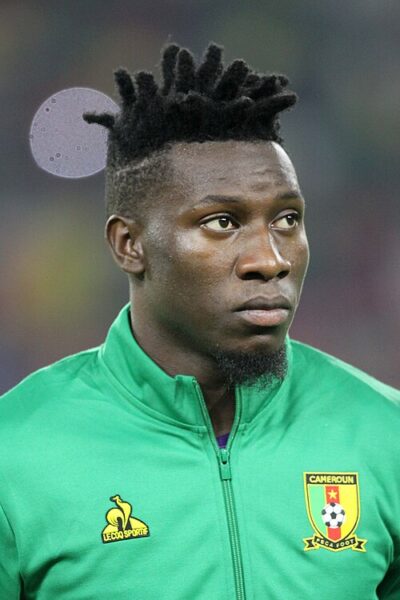
goalkeeper
Goalkeeper is a position in association football.
All 2 facts, and where they come from
Facts
2 facts · 0 confirmed by two sources · 0 cited · 2 from one source
Where this comes from
Papalocal keeps its own record. It started from these sources; what each one said is kept here as it was copied, so a change on their side never changes this page by itself. Tap one to read its version.
What Wikidata says · copied November 17, 2026 · revision 2566939129
- Described as
- position in association football
- Other names
- football goalkeeper, soccer goalkeeper, GK, goalie, goal keeper, keeper, association football goalkeeper
- What it is
- association football position
- Sport
- association football
- Wikipedias with a page
- 81
Wikidata item Q201330 (wikidata.org/wiki/Q201330), public domain (CC0). Copied 2026-11-17.
What Wikipedia says · copied November 17, 2026 · revision 1385473897
The goalkeeper (sometimes written as goal-keeper and often shortened to "keeper") is a position in association football. It is the most specialised position in the sport. The goalkeeper's main role is to stop the opposing team from scoring a "goal" (i.e. putting the ball over the goal line). This is accomplished by the goalkeeper moving into the trajectory of the ball to either catch it or re-direct it away from the vicinity of the goal. Within the penalty area, goalkeepers are allowed to use their hands, giving them (outside throw-ins) the sole rights on the field to handle the ball. The goalkeeper is indicated by wearing a different coloured kit from their teammates and opposition.
The back-pass rule is a rule that disallows handling passes back to keepers from teammates in most cases. Goalkeepers usually perform goal kicks and also give commands to their defense during corner kicks, direct and indirect free kicks, and marking. Goalkeepers play an important role in directing onfield strategy as they have an unrestricted view of the entire pitch, giving them a unique perspective on play development.
The goalkeeper is the only mandatory position of a team. If they are injured or sent off, another player must take their place. To replace a goalkeeper who is sent off, a team usually (but is not required to) brings on a substitute keeper in place of an outfield player to ensure they still play an outfield player down. If a team does not have a substitute goalkeeper, or they have already used all of their permitted substitutions for the match, an outfield player has to play as goalkeeper.
Because the position requires different skills from the outfielders, goalkeepers train separately from their teammates and often work with a goalkeeping coach to develop their play. While outfielders typically must be in good cardiovascular shape to play up to 90 minutes in a match, a goalkeeper must be able to move quickly and have fast feet for little bursts. During a match, goalkeepers may get a lot of action, usually in brief intervals, until their teammates can clear the ball out of the zone. During practice, goalkeepers focus heavily on footwork and being able to get up quickly after a save is made. A goalkeeper must be able to get set, meaning feet shoulder width apart and on their toes, before the next shot comes their way, so they can react and make the save.
As with all players, goalkeepers may wear any squad number, but the number 1 is almost always reserved for a team's first-choice goalkeeper, and the number 13 for the second-choice or backup goalkeeper.
The goalkeeper is notably the only position that is not included in formations. This is because the goalkeeper is the only non-outfielder position and the only compulsory position in football.
Although not essential, goalkeepers are standardly tall players due to the height of the goal and the number of crosses, corners, and high shots in football.
From the Wikipedia article “Goalkeeper (association football)” (en.wikipedia.org/wiki/Goalkeeper_(association_football)), by its contributors, under CC BY-SA 4.0 (creativecommons.org/licenses/by-sa/4.0/). Copied 2026-11-17; not changed.
Confirmed Two sources agree. Cited One source, and it names where it got it. One source One source, without a reference of its own. Sources disagree The sources disagree. We show the best-supported value and keep theirs below.