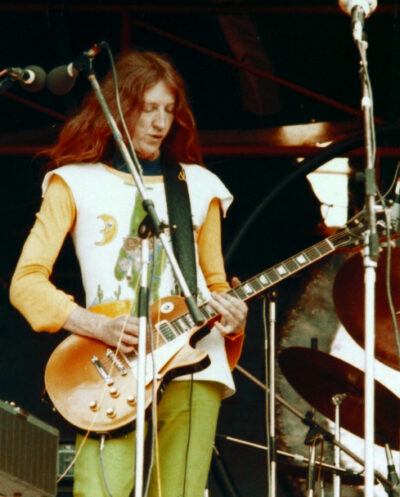
Gong
Gong is a French-British progressive/psychedelic rock band. It was founded in 1967.
All 7 facts, and where they come from
Facts
7 facts · 0 confirmed by two sources · 0 cited · 7 from one source
Where this comes from
Papalocal keeps its own record. It started from these sources; what each one said is kept here as it was copied, so a change on their side never changes this page by itself. Tap one to read its version.
What Wikidata says · copied November 18, 2026 · revision 2554695186
- Described as
- French-British progressive/psychedelic rock band
- What it is
- rock band
- Genre
- progressive rock
- Country of origin
- France
- Record label
- Virgin
- Founded
- 1967
- Ended
- 1977
- Official website
- http://www.planetgong.co.uk/
- Wikipedias with a page
- 24
Wikidata item Q544024 (wikidata.org/wiki/Q544024), public domain (CC0). Copied 2026-11-18.
What Wikipedia says · copied November 18, 2026 · revision 1370191016
Gong are a rock band associated with the Canterbury scene. They incorporate elements of psychedelic rock, jazz and space rock into their musical style. The group was formed in Paris in 1967 by Australian musician Daevid Allen and English vocalist Gilli Smyth. Band members have included Didier Malherbe, Pip Pyle, Steve Hillage, Mike Howlett, Tim Blake, Pierre Moerlen, Bill Laswell and Theo Travis. Others who have played on stage with Gong include Don Cherry, Chris Cutler, Bill Bruford, Brian Davison, Dave Stewart and Tatsuya Yoshida.
Gong's 1970 debut album, Magick Brother, featured a psychedelic rock sound. By the following year, the second album, Camembert Electrique, featured the more progressive rock/space rock sound with which they would be most associated. Between 1973 and 1974, Gong released their best-known work, the allegorical Radio Gnome Invisible trilogy, consisting of Flying Teapot (1973), Angel's Egg (1973) and You (1974), which details the adventures of Zero the Hero, the Good Witch Yoni and the Pot Head Pixies from the Planet Gong.
In 1975, Allen and Smyth left the band, which continued without them, releasing the Howlett-fronted Shamal (1976) and a series of jazz rock albums under the leadership of drummer Pierre Moerlen. This incarnation soon became known as Pierre Moerlen's Gong. Meanwhile, Smyth formed Mother Gong while Allen initiated a series of spin-off groups, including Planet Gong, New York Gong and Gongmaison, before returning to lead Gong once again in 1990 until his death in 2015. With Allen's encouragement, the band decided to continue as a quintet comprising guitarist Fabio Golfetti, bassist Dave Sturt, woodwind player Ian East, guitarist and vocalist Kavus Torabi, and drummer Cheb Nettles. They released the album Rejoice! I'm Dead! in September 2016, followed by the loose trilogy of albums The Universe Also Collapses (2019), Unending Ascending (2023), and Bright Spirit (2026).
From the Wikipedia article “Gong (band)” (en.wikipedia.org/wiki/Gong_(band)), by its contributors, under CC BY-SA 4.0 (creativecommons.org/licenses/by-sa/4.0/). Copied 2026-11-18; not changed.
Confirmed Two sources agree. Cited One source, and it names where it got it. One source One source, without a reference of its own. Sources disagree The sources disagree. We show the best-supported value and keep theirs below.
Picture: Wikimedia Commons: Gong 2025.jpg · See Commons file page