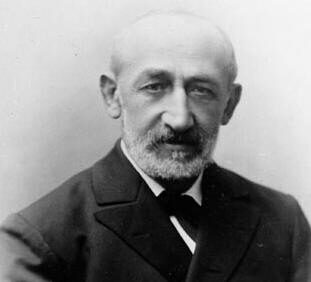
Gordan's lemma
Gordan's lemma is a Theorem in convex and algebraic geometry.
All 2 facts, and where they come from
Facts
2 facts · 0 confirmed by two sources · 0 cited · 2 from one source
Where this comes from
Papalocal keeps its own record. It started from these sources; what each one said is kept here as it was copied, so a change on their side never changes this page by itself. Tap one to read its version.
What Wikidata says · copied November 18, 2026 · revision 2492682673
- Described as
- Theorem in convex and algebraic geometry
- What it is
- theorem
- Named after
- Paul Gordan
- Wikipedias with a page
- 2
Wikidata item Q25098650 (wikidata.org/wiki/Q25098650), public domain (CC0). Copied 2026-11-18.
What Wikipedia says · copied November 18, 2026 · revision 1364710937
Gordan's lemma is a lemma in convex geometry and algebraic geometry. It can be stated in several ways.
Let A be a matrix of integers. Let M be the set of non-negative integer solutions of A⋅x=0. Then there exists a finite subset of vectors in M, such that every element of M is a linear combination of these vectors with non-negative integer coefficients.
The semigroup of integral points in a rational convex polyhedral cone is finitely generated.
An affine toric variety is an algebraic variety (this follows from the fact that the prime spectrum of the semigroup algebra of such a semigroup is, by definition, an affine toric variety).
The lemma is named after the mathematician Paul Gordan (1837–1912). Some authors have misspelled it as "Gordon's lemma".
From the Wikipedia article “Gordan's lemma” (en.wikipedia.org/wiki/Gordan's_lemma), by its contributors, under CC BY-SA 4.0 (creativecommons.org/licenses/by-sa/4.0/). Copied 2026-11-18; not changed.
Confirmed Two sources agree. Cited One source, and it names where it got it. One source One source, without a reference of its own. Sources disagree The sources disagree. We show the best-supported value and keep theirs below.