Gospel of Luke
Gospel of Luke is a book of the New Testament. It came out in 85. It was written by Luke the Evangelist. It is based on Q source.
- Came out
- 85
- Written by
- Luke the Evangelist
- Genre
- Gospel
All 9 facts, and where they come from
Facts
9 facts · 0 confirmed by two sources · 1 cited · 8 from one source
Where this comes from
Papalocal keeps its own record. It started from these sources; what each one said is kept here as it was copied, so a change on their side never changes this page by itself. Tap one to read its version.
What Wikidata says · copied November 17, 2026 · revision 2555024615
- Described as
- book of the New Testament
- Other names
- Luke, Gospel of Saint Luke, Gospel According to Luke, Gospel of St. Luke, Gospel of St Luke, Gospel according to Saint Luke, Gospel according to St Luke, Gospel according to St. Luke, Lk, Book of Luke, Third Gospel
- What it is
- book of the Bible · 1 reference; literary work
- Written by
- Luke the Evangelist
- Genre
- Gospel
- Language
- New Testament Greek
- Based on
- Q source; L source
- Came out
- 85
- Named after
- Luke the Evangelist
- Wikipedias with a page
- 149
Wikidata item Q39939 (wikidata.org/wiki/Q39939), public domain (CC0). Copied 2026-11-17.
What Wikipedia says · copied November 17, 2026 · revision 1382641630
The Gospel of Luke is a book in the New Testament that is the third of the canonical Gospels. It tells of the origins, birth, ministry, death, resurrection, and ascension of Jesus. Together with the Acts of the Apostles, it makes up a two-volume work called Luke–Acts, accounting for 27.5% of the New Testament.
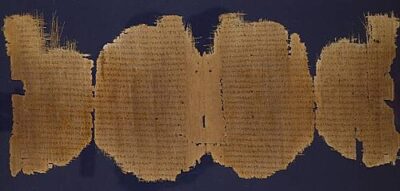
The Gospel of Luke shares the same author as the Acts of the Apostles. Tradition identifies the writer as Luke the Evangelist, a doctor who travelled with Paul the Apostle, though the text does not name its author. The author is presented as a participant in the events narrated in the first-person we passages of Acts. Most critical scholars maintain that the author was a traveling companion of Paul, though some cite differences with the Pauline epistles. Luke used the Gospel of Mark, and the two-source hypothesis also posits usage of Q, though a growing number of scholars contend Luke used Matthew instead. Most scholars now agree the Gospel of John knew and used Luke and the other Synoptics. Luke follows Mark closely compared to other ancient historians' usage of sources, though the parallels and variations of the Synoptic gospels are typical of ancient historical biographies. The most common dating for its composition is around AD 80–90. The earliest witnesses for Luke are the Alexandrian and the revised western text-type.
Following the preface and the birth narratives of John and Jesus, the gospel begins in Galilee and moves gradually to its climax in Jerusalem. Luke espouses a three-stage "salvation history" starting with the Law and the prophets, the epoch of Jesus, and the period of the church. The gospel's high Christology portrays Jesus as divine in various ways, identifying him with the God of Israel and as a preexistent messiah within its Jewish and Greco-Roman context. The Holy Spirit also plays a more prominent role compared to other Christian works, forming the basis of the early Christian community.
From the Wikipedia article “Gospel of Luke” (en.wikipedia.org/wiki/Gospel_of_Luke), by its contributors, under CC BY-SA 4.0 (creativecommons.org/licenses/by-sa/4.0/). Copied 2026-11-17; not changed.
Confirmed Two sources agree. Cited One source, and it names where it got it. One source One source, without a reference of its own. Sources disagree The sources disagree. We show the best-supported value and keep theirs below.
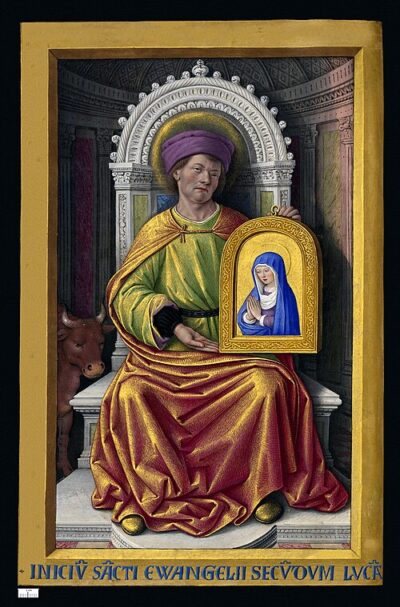
Picture: Unknown author, via Wikimedia Commons · Public domain