
Governor-General of Australia
Governor-General of Australia is a representative of the monarch of Australia. It was created in 1901.
All 5 facts, and where they come from
Facts
5 facts · 0 confirmed by two sources · 0 cited · 5 from one source
Where this comes from
Papalocal keeps its own record. It started from these sources; what each one said is kept here as it was copied, so a change on their side never changes this page by itself. Tap one to read its version.
What Wikidata says · copied November 17, 2026 · revision 2550073591
- Described as
- representative of the monarch of Australia
- Other names
- Governor General of Australia, Governor-General of the Commonwealth of Australia, Australian Governor-General
- What it is
- position
- Created
- January 1, 1901
- Country
- Australia
- Office of
- Australia
- Official website
- https://www.gg.gov.au/
- Wikipedias with a page
- 48
Wikidata item Q610669 (wikidata.org/wiki/Q610669), public domain (CC0). Copied 2026-11-17.
What Wikipedia says · copied November 17, 2026 · revision 1382927771
The governor-general of the Commonwealth of Australia is the federal representative of the monarch of Australia, currently Charles III. The governor-general has many constitutional and ceremonial functions in the Australian political system, in which they have independent agency. However, they are generally bound by convention to act on the advice of the prime minister and the Federal Executive Council. They also have a significant community role, through recognising meritorious groups and individuals, bestowing honours and awards, attending public events, serving as a patron of local organisations, and representing the country as a whole. The current governor-general is Sam Mostyn, who has served in the role since 1 July 2024.
Notable functions of the governor-general include giving royal assent to bills passed by both houses of parliament, issuing writs for elections, exercising executive authority on the advice of the Federal Executive Council, appointing government officials (including the prime minister, cabinet ministers, judges and ambassadors), acting as commander-in-chief of the Australian Defence Force (a largely ceremonial role), and bestowing Australian honours and awards. However, in almost all instances, the governor-general exercises de jure power only in accordance with the principles of the Westminster system and responsible government. This requires them to remain politically neutral and to act only in accordance with the wishes of Parliament (such as when selecting the prime minister and providing royal assent) or on the advice of ministers (when performing executive actions). However, in certain limited circumstances, the governor-general can exercise reserve powers (powers that may be exercised without or against formal advice); this has happened only rarely, most notably during the 1975 Australian constitutional crisis. These situations are often controversial and the use of and continued existence of discretionary reserve powers remains the subject of much debate.
In their ceremonial and community roles, the governor-general represents the nation both at home and abroad. Domestically, this role involves attending services and commemorations, sponsoring community organisations and hosting events at one of their two official residences (Government House in Canberra or Admiralty House in Sydney). Internationally, the governor-general represents Australia by travelling to and attending significant events (such as state funerals) and by performing and receiving state visits. The governor-general is supported by a staff (of 80 in 2018) headed by their official secretary.
The governor-general is selected by the prime minister, but is formally appointed by the monarch on the prime minister's advice. Their term is not fixed, but they typically serve for five years. From Federation in 1901 until 1965, 11 of the 15 governors-general were British aristocrats; however, all governors-general since then have been Australian citizens. The current governor-general, Sam Mostyn, is the second woman to hold the post, the first being Dame Quentin Bryce (2008–2014).
From the Wikipedia article “Governor-General of Australia” (en.wikipedia.org/wiki/Governor-General_of_Australia), by its contributors, under CC BY-SA 4.0 (creativecommons.org/licenses/by-sa/4.0/). Copied 2026-11-17; not changed.
Confirmed Two sources agree. Cited One source, and it names where it got it. One source One source, without a reference of its own. Sources disagree The sources disagree. We show the best-supported value and keep theirs below.
People connected 6
Held this office
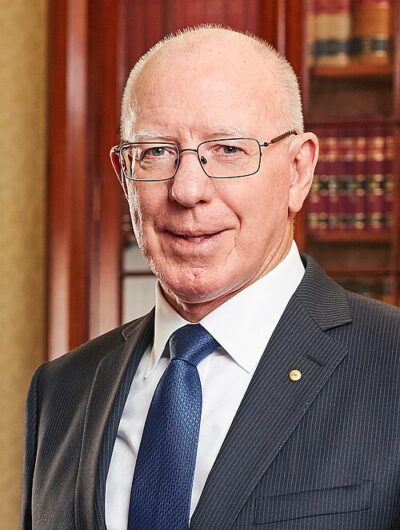 David Hurley (2019–2024)Australian general; 27th Governor-General of Australia
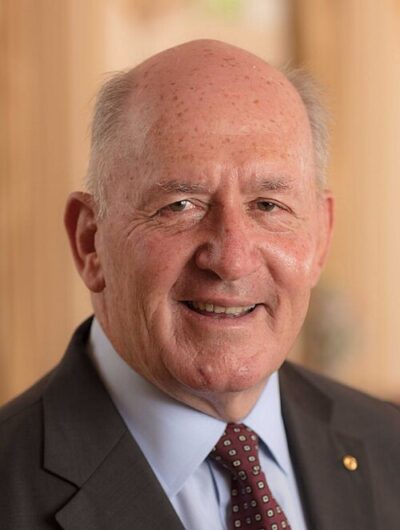 Peter Cosgrove (2014–2019)Australian general; 26th Governor-General of Australia
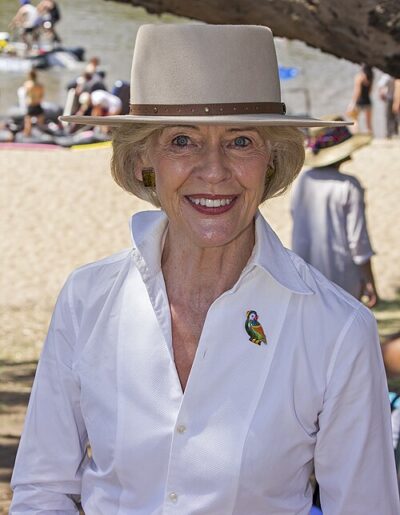 Quentin Bryce (2008–2014)25th Governor-General of Australia
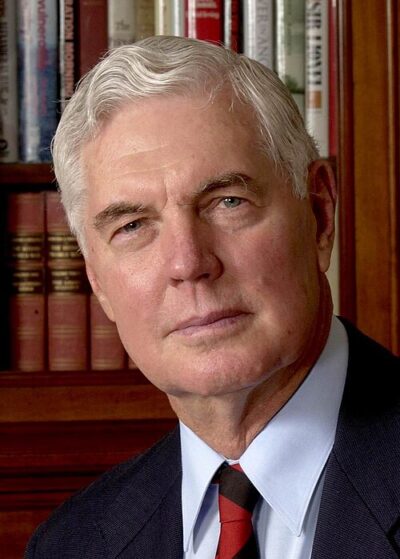 Michael Jeffery (2003–2008)Australian governor-general and army officer (1937-2020)
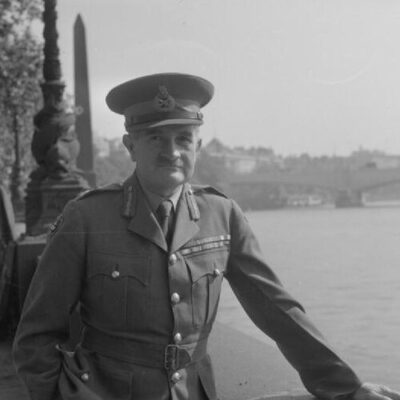 William Slim, 1st Viscount Slim (1953–1960)former Governor-General of Australia (1891-1970)
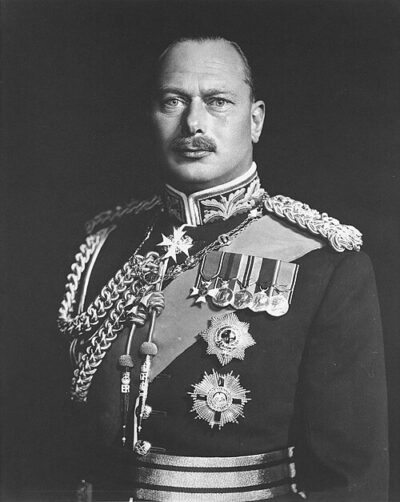 Prince Henry, Duke of Gloucester (1945–1947)British soldier (1900–1974), Governor-General of Australia from 1945 to 1947
