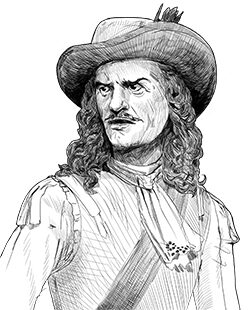
Governor General of New France
Governor General of New France is a vice-regal post of French North America from 1663 to 1760.
- Office of
- New France
All 2 facts, and where they come from
Facts
2 facts · 0 confirmed by two sources · 0 cited · 2 from one source
Where this comes from
Papalocal keeps its own record. It started from these sources; what each one said is kept here as it was copied, so a change on their side never changes this page by itself. Tap one to read its version.
What Wikidata says · copied November 18, 2026 · revision 2570964468
- Described as
- vice-regal post of French North America from 1663 to 1760
- What it is
- position
- Office of
- New France
- Wikipedias with a page
- 4
Wikidata item Q5589555 (wikidata.org/wiki/Q5589555), public domain (CC0). Copied 2026-11-18.
What Wikipedia says · copied November 18, 2026 · revision 1352692557
Governor General of New France was the vice-regal post in New France from 1663 until 1760 and the last French vice-regal post. It replaced the post of Governor of New France, and was replaced by the British post of Governor of the Province of Quebec following the fall of New France.
In 1663, New France was reformed to be under the rule of a Governor General. This was a nobleman serving as the king's personal representative, with power to command troops and oversee diplomacy. Domestic power was delegated to the Sovereign Council of New France, which the Governor General chaired, and to the Intendant of New France, a civil administrator.
While the districts of Montreal and Trois-Rivières had their own governors, the Governor of the District of Quebec City and the Governor General of New France were the same person.
From the Wikipedia article “Governor General of New France” (en.wikipedia.org/wiki/Governor_General_of_New_France), by its contributors, under CC BY-SA 4.0 (creativecommons.org/licenses/by-sa/4.0/). Copied 2026-11-18; not changed.
Confirmed Two sources agree. Cited One source, and it names where it got it. One source One source, without a reference of its own. Sources disagree The sources disagree. We show the best-supported value and keep theirs below.