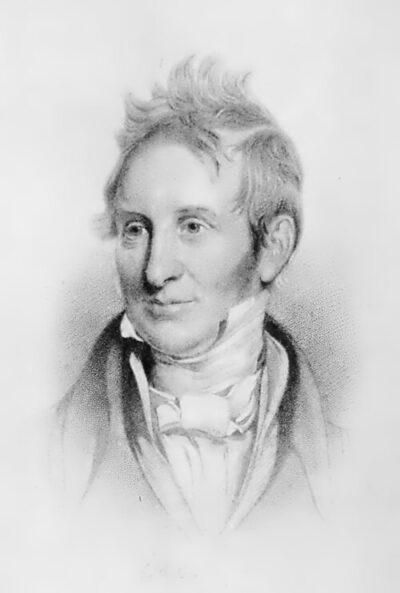
Governor of Bombay
Governor of Bombay is a chief administrative and political officer of Bombay during British rule of India. It is an office of Mumbai.
- Office of
- Mumbai
- Country
- India
All 3 facts, and where they come from
Facts
3 facts · 0 confirmed by two sources · 0 cited · 3 from one source
Where this comes from
Papalocal keeps its own record. It started from these sources; what each one said is kept here as it was copied, so a change on their side never changes this page by itself. Tap one to read its version.
What Wikidata says · copied November 17, 2026 · revision 2569185112
- Described as
- chief administrative and political officer of Bombay during British rule of India
- What it is
- position
- Country
- India
- Office of
- Mumbai
- Wikipedias with a page
- 5
Wikidata item Q379496 (wikidata.org/wiki/Q379496), public domain (CC0). Copied 2026-11-17.
What Wikipedia says · copied November 17, 2026 · revision 1385669499
Until the 18th century, Bombay consisted of seven islands separated by shallow sea. These seven islands were part of a larger archipelago in the Arabian sea, off the western coast of India. The date of city's founding is unclear—historians trace back urban settlement to the late 17th century after the British secured the seven islands from the Portuguese to establish a secure base in the region. The islands provided the British with a sheltered harbour for trade, in addition to a relatively sequestered location that reduced the chances of land-based attacks. Over the next two centuries, the British dominated the region, first securing the archipelago from the Portuguese, and later defeating the Marathas to secure the hinterland.
Bombay Presidency was one of the three Presidencies of British India; the other two being Madras Presidency, and Bengal Presidency. It was in the centre-west of the Indian subcontinent on the Arabian Sea. It was bordered to the north-west, north, and north-east by Baluchistan province, Punjab province, and Rajputana Agency; to the east by Central India Agency, the Central Provinces and Berar and Hyderabad State; and to the south by Madras Presidency and Mysore State. The Presidency was established in the late 17th century and named after Bombay, the capital city and the island on which it was built. By 1906, the area under the jurisdiction of Bombay Presidency stretched from North Canara in the south to Sindh in the north, encompassing the now-Pakistani province of Sindh, some parts of the present-day state of Gujarat, northwestern part of Karnataka state, the British Aden protectorate in Yemen, and the western two-thirds of modern-day Maharashtra.
During British rule, a Governor was the chief administrative and political officer of Bombay. The executive Government of the Presidency was administered by the Governor. He had the same power and right in the Presidency as the Governor-General of India, and observed the same order and course in their proceedings. Governors of Bombay and Madras Presidencies, who were appointed by the East India Company before 1858 and the British Crown subsequently, were the most important officials after the Viceroy. Bombay Castle was the official residence of the governor of Bombay until the 1770s, when it was moved to Parel; a century later, in 1883, it was moved to Malabar Hill.
Abraham Shipman was appointed the first Royal Governor of Bombay in 1662. Beginning in 1668, Charles II leased the islands to the East India Company—George Oxenden was appointed the first Company Governor of Bombay on 23 September 1668. In 1687, the Company relocated its headquarters from Surat to Bombay. In 1858, the British Crown took formal repossession of the territory after the company was disbanded. After India's independence in 1947, the territory was restructured into Bombay State. The area of Bombay State increased, after several erstwhile princely states that acceded to the Indian union were integrated into Bombay State. Raja Maharaj Singh was the first Indian Governor of Bombay after independence. On 1 May 1960, Bombay State was restructured on linguistic lines—Gujarati-speaking areas were partitioned into the state of Gujarat, and Marathi-speaking areas of Bombay State, Central Provinces and Berar, and Hyderabad State were integrated as the state of Maharashtra. The last person to hold the title of "Governor of Bombay" was Sri Prakasa in 1960.
From the Wikipedia article “List of governors of the Bombay Presidency” (en.wikipedia.org/wiki/List_of_governors_of_the_Bombay_Presidency), by its contributors, under CC BY-SA 4.0 (creativecommons.org/licenses/by-sa/4.0/). Copied 2026-11-17; not changed.
Confirmed Two sources agree. Cited One source, and it names where it got it. One source One source, without a reference of its own. Sources disagree The sources disagree. We show the best-supported value and keep theirs below.