
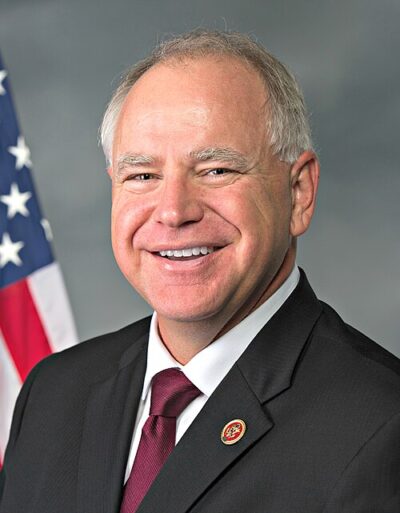
Governor of Minnesota
Governor of Minnesota is a head of state and of government of the U.S. state of Minnesota. It was created in 1858.
- Office of
- Minnesota
- Country
- United States
- Created
- May 24, 1858
All 5 facts, and where they come from
Facts
5 facts · 0 confirmed by two sources · 0 cited · 5 from one source
Where this comes from
Papalocal keeps its own record. It started from these sources; what each one said is kept here as it was copied, so a change on their side never changes this page by itself. Tap one to read its version.
What Wikidata says · copied November 16, 2026 · revision 2569531904
- Described as
- head of state and of government of the U.S. state of Minnesota
- Other names
- Minnesota Governor
- What it is
- governor
- Created
- May 24, 1858
- Country
- United States
- Office of
- Minnesota
- Official website
- https://mn.gov/governor/
- Wikipedias with a page
- 15
Wikidata item Q5589682 (wikidata.org/wiki/Q5589682), public domain (CC0). Copied 2026-11-16.
What Wikipedia says · copied November 16, 2026 · revision 1379963069
The governor of Minnesota is the head of government of the state of Minnesota, leading the state's executive branch. Forty people have been governor of Minnesota, and previously three of Minnesota Territory. Alexander Ramsey, the first territorial governor, also served as state governor several years later. State governors are elected to office by popular vote; territorial governors were appointed to the office by the United States president. The current governor of Minnesota is Tim Walz of the Democratic-Farmer-Labor Party (DFL), affiliated with the Democratic Party.
From the Wikipedia article “Governor of Minnesota” (en.wikipedia.org/wiki/Governor_of_Minnesota), by its contributors, under CC BY-SA 4.0 (creativecommons.org/licenses/by-sa/4.0/). Copied 2026-11-16; not changed.
Confirmed Two sources agree. Cited One source, and it names where it got it. One source One source, without a reference of its own. Sources disagree The sources disagree. We show the best-supported value and keep theirs below.
Picture: United States Congress, via Wikimedia Commons · Public domain
People connected 5
Held this office
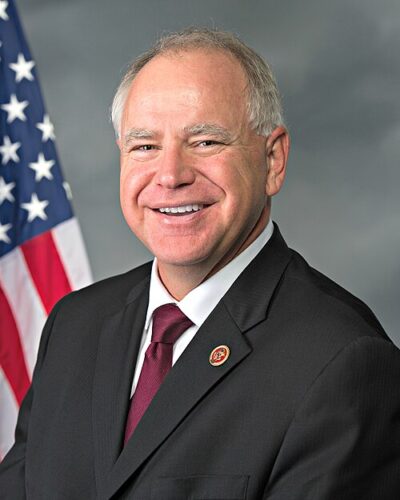 Tim Walz (2019–)American politician (born 1964)
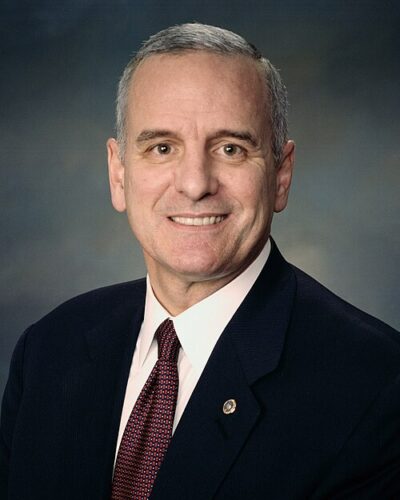 Mark Dayton (2011–2019)40th Governor of Minnesota; former United States Senator from Minnesota
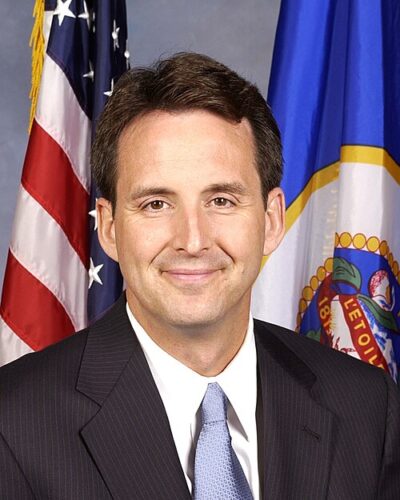 Tim Pawlenty (2003–2011)American politician (born 1960)
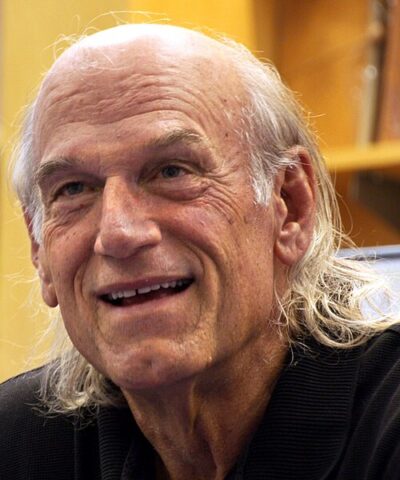 Jesse Ventura (1999–2003)American professional wrestler and 38th governor of Minnesota (born 1951)
 Wendell R. Anderson (1971–1976)American politician (1933-2016)
