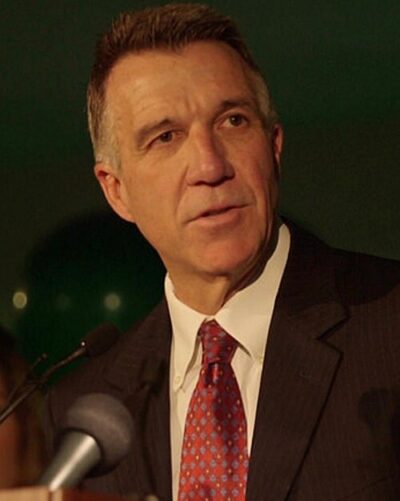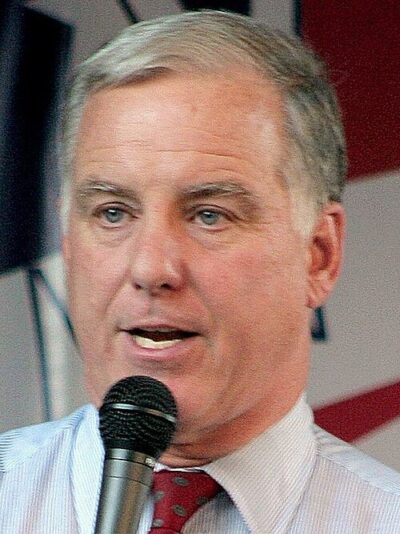
Governor of Vermont
Governor of Vermont is a head of state and of government of the U.S. state of Vermont. It was created in 1790.
- Office of
- Vermont
- Country
- United States
- Created
- October 20, 1790
All 5 facts, and where they come from
Facts
5 facts · 0 confirmed by two sources · 1 cited · 4 from one source
Where this comes from
Papalocal keeps its own record. It started from these sources; what each one said is kept here as it was copied, so a change on their side never changes this page by itself. Tap one to read its version.
What Wikidata says · copied November 17, 2026 · revision 2569534285
- Described as
- head of state and of government of the U.S. state of Vermont
- Other names
- Governor of the State of Vermont, Vermont Governor
- What it is
- governor
- Created
- October 20, 1790 · 1 reference
- Country
- United States
- Office of
- Vermont
- Official website
- https://governor.vermont.gov/
- Wikipedias with a page
- 10
Wikidata item Q3773745 (wikidata.org/wiki/Q3773745), public domain (CC0). Copied 2026-11-17.
What Wikipedia says · copied November 17, 2026 · revision 1379838777
The governor of Vermont is the head of government of the U.S. state of Vermont. The officeholder is elected in even-numbered years by direct voting for a term of two years. Vermont and bordering New Hampshire are the only states to hold gubernatorial elections every two years, instead of every four as in the other 48 U.S. states.
There is no limit on the number of terms a Vermont governor can serve. If no candidate receives at least 50% plus one vote of all votes for governor cast in the election, the governor of Vermont is then elected by the state legislature. The incumbent Vermont governor is Republican Phil Scott. He was sworn in on January 5, 2017, becoming Vermont's 82nd governor.
Despite having a Republican governor, Vermont has the most Democratic Cook Partisan Voting Index of any of the 50 U.S. states, at D+17.
From the Wikipedia article “Governor of Vermont” (en.wikipedia.org/wiki/Governor_of_Vermont), by its contributors, under CC BY-SA 4.0 (creativecommons.org/licenses/by-sa/4.0/). Copied 2026-11-17; not changed.
Confirmed Two sources agree. Cited One source, and it names where it got it. One source One source, without a reference of its own. Sources disagree The sources disagree. We show the best-supported value and keep theirs below.
Picture: US Embassy Canada, via Wikimedia Commons · CC BY 2.0