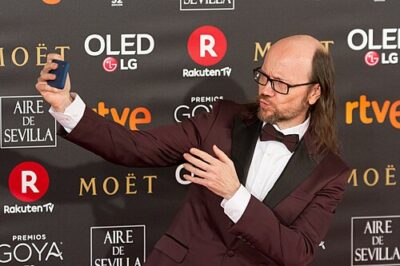
Goya Award for Best Fictional Short Film
Goya Award for Best Fictional Short Film is an annual Spanish film award category.
- Country
- Spain
All 4 facts, and where they come from
Facts
4 facts · 0 confirmed by two sources · 0 cited · 4 from one source
Where this comes from
Papalocal keeps its own record. It started from these sources; what each one said is kept here as it was copied, so a change on their side never changes this page by itself. Tap one to read its version.
What Wikidata says · copied November 17, 2026 · revision 2490992863
- Described as
- annual Spanish film award category
- What it is
- class of award; Goya Awards
- Genre
- fiction film
- Country
- Spain
- Wikipedias with a page
- 6
Wikidata item Q3395001 (wikidata.org/wiki/Q3395001), public domain (CC0). Copied 2026-11-17.
What Wikipedia says · copied November 17, 2026 · revision 1386211730
The Goya Award for Best Fictional Short Film (Spanish: Premio Goya a la mejor cortometraje de ficción) is one of the Goya Awards presented annually by the Academy of Cinematographic Arts and Sciences of Spain (AACCE) since the 4th edition of the awards in 1989. From 1989 to 1991 there was only one award for short films under the name Best Short Film ("Mejor cortometraje"), since 1992 it has been presented under its current for fictional short films.
The short films Esposados (1996), That Wasn't Me (2012), Timecode (2016) and Mother (2017) have received a nomination for the Academy Award for Best Live Action Short Film. At the European Film Awards, the films The Runner (2015) and Suc de Síndria (2019) have been nominated to Best Short Film while Timecode (2016) won the award.
From the Wikipedia article “Goya Award for Best Fictional Short Film” (en.wikipedia.org/wiki/Goya_Award_for_Best_Fictional_Short_Film), by its contributors, under CC BY-SA 4.0 (creativecommons.org/licenses/by-sa/4.0/). Copied 2026-11-17; not changed.
Confirmed Two sources agree. Cited One source, and it names where it got it. One source One source, without a reference of its own. Sources disagree The sources disagree. We show the best-supported value and keep theirs below.