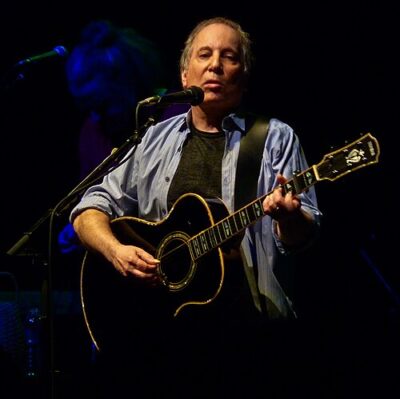
Graceland
Graceland is a 1986 studio album by Paul Simon. It won the Grammy Hall of Fame and 2 more.
- Released
- August 25, 1986
- Performed by
- Paul Simon
- Genre
- rock music
All 13 facts, and where they come from
Facts
13 facts · 0 confirmed by two sources · 4 cited · 9 from one source
Where this comes from
Papalocal keeps its own record. It started from these sources; what each one said is kept here as it was copied, so a change on their side never changes this page by itself. Tap one to read its version.
What Wikidata says · copied November 16, 2026 · revision 2394072674
- Described as
- 1986 studio album by Paul Simon
- Other names
- 1-25447, 9 25447-1
- What it is
- album · 1 reference
- Performed by
- Paul Simon
- Produced by
- Paul Simon · 1 reference
- Genre
- rock music · 3 references; mbaqanga · 3 references; world music · 2 references; worldbeat · 3 references
- Released
- August 25, 1986
- Language
- English
- Record label
- Warner Bros. Records
- Awards
- Grammy Hall of Fame (2011); Grammy Award for Album of the Year (1986); American Music Award for Favorite Pop/Rock Album (1988)
- Wikipedias with a page
- 20
Wikidata item Q1027822 (wikidata.org/wiki/Q1027822), public domain (CC0). Copied 2026-11-16.
What Wikipedia says · copied November 16, 2026 · revision 1385402437
Graceland is the seventh solo studio album by the American singer-songwriter Paul Simon. It was produced by Simon, engineered by Roy Halee, and released on August 25, 1986, by Warner Bros. Records. It incorporates multiple genres, including pop, rock, a cappella, zydeco, and South African styles such as isicathamiya and mbaqanga.
In the early 1980s, Simon's relationship with his former musical partner Art Garfunkel had deteriorated, his marriage to the actress Carrie Fisher had collapsed, and his previous record, Hearts and Bones (1983), had been a commercial failure. In 1984, after a period of depression, Simon became fascinated by a bootleg cassette of mbaqanga, South African street music. He and Halee spent two weeks in Johannesburg recording with South African musicians. Further recordings were held in the US with American musicians, including Linda Ronstadt, the Everly Brothers, Rockin' Dopsie and the Twisters, and Los Lobos. Simon toured with South African musicians, performing their music and songs from Graceland.
Graceland became Simon's most successful album and his highest-charting album in over a decade, with estimated sales of more than 16 million copies worldwide. It won the 1987 Grammy for Album of the Year and is frequently cited as one of the best albums in history. In 2006, it was added to the US National Recording Registry as "culturally, historically, or aesthetically important".
Organizations such as Artists United Against Apartheid criticized Simon for breaking the cultural boycott on South Africa imposed for its policy of apartheid, while others accused him of appropriating the music of another culture. Simon responded that Graceland was a political statement that showcased collaboration between black and white people and raised international awareness of apartheid. Some praised him for helping popularize African music in the West.
From the Wikipedia article “Graceland (album)” (en.wikipedia.org/wiki/Graceland_(album)), by its contributors, under CC BY-SA 4.0 (creativecommons.org/licenses/by-sa/4.0/). Copied 2026-11-16; not changed.
Confirmed Two sources agree. Cited One source, and it names where it got it. One source One source, without a reference of its own. Sources disagree The sources disagree. We show the best-supported value and keep theirs below.
Picture: Wikimedia Commons: Graceland cover - Paul Simon.jpg · See Commons file page