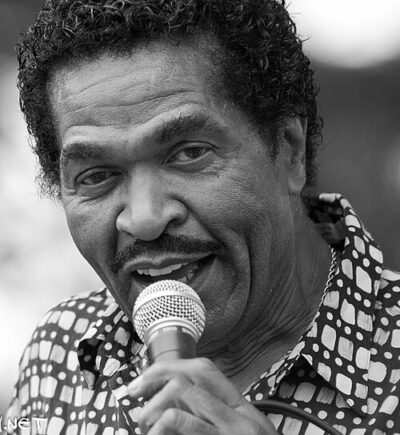
Grammy Award for Best Traditional Blues Album
Grammy Award for Best Traditional Blues Album is a class of award. It was created in 1983.
- Country
- United States
- Created
- 1983
All 4 facts, and where they come from
Facts
4 facts · 0 confirmed by two sources · 0 cited · 4 from one source
Where this comes from
Papalocal keeps its own record. It started from these sources; what each one said is kept here as it was copied, so a change on their side never changes this page by itself. Tap one to read its version.
What Wikidata says · copied November 16, 2026 · revision 2556852462
- Described as
- award
- What it is
- class of award
- Created
- 1983
- Country
- United States · 1 reference
- Official website
- http://www.grammy.com/ · 1 reference
- Wikipedias with a page
- 13
Wikidata item Q3107449 (wikidata.org/wiki/Q3107449), public domain (CC0). Copied 2026-11-16.
What Wikipedia says · copied November 16, 2026 · revision 1375619611
The Grammy Award for Best Traditional Blues Album was awarded from 1983 to 2011 and from 2017 onwards. Until 1992 the award was known as Best Traditional Blues Performance and was twice awarded to individual tracks rather than albums.
The award was discontinued after the 2011 Grammy season in a major overhaul of Grammy categories. From 2012 onwards, the category was merged with the Best Contemporary Blues Album category to form the new Best Blues Album category. However, in 2016 the Grammy organisation decided to revert the situation back to the pre-2012 era, with two separate categories for traditional and contemporary blues recordings respectively.
Years reflect the year in which the Grammy Awards were handed out, for music released in the previous year. B.B. King holds the record of most wins in the category with ten.
From the Wikipedia article “Grammy Award for Best Traditional Blues Album” (en.wikipedia.org/wiki/Grammy_Award_for_Best_Traditional_Blues_Album), by its contributors, under CC BY-SA 4.0 (creativecommons.org/licenses/by-sa/4.0/). Copied 2026-11-16; not changed.
Confirmed Two sources agree. Cited One source, and it names where it got it. One source One source, without a reference of its own. Sources disagree The sources disagree. We show the best-supported value and keep theirs below.