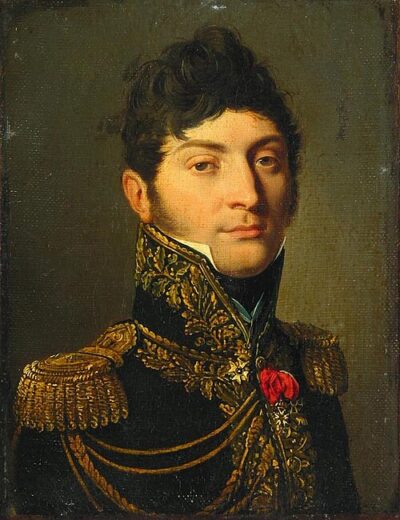
Grand Marshal of the Palace
Grand Marshal of the Palace is the first French Empire position.
- Country
- France
All 2 facts, and where they come from
Facts
2 facts · 0 confirmed by two sources · 0 cited · 2 from one source
Where this comes from
Papalocal keeps its own record. It started from these sources; what each one said is kept here as it was copied, so a change on their side never changes this page by itself. Tap one to read its version.
What Wikidata says · copied November 19, 2026 · revision 2570658762
- Described as
- First French Empire position
- What it is
- position
- Country
- France
- Wikipedias with a page
- 5
Wikidata item Q5594795 (wikidata.org/wiki/Q5594795), public domain (CC0). Copied 2026-11-19.
What Wikipedia says · copied November 19, 2026 · revision 1370326719
Grand marshal of the palace (French: Grand maréchal du palais) was the title used by the leader of the Military Household of the Emperor, during the First French Empire. The responsibilities of this position included: keeping accounts of the expenses (food, scouting, security, servants, etc.), policing and ensuring the security of the household, during wartime as well as during peacetime.
General Géraud Duroc held the position from the moment when Napoleon I became Emperor of the French (18 May 1804) until his death in battle on 23 May 1813. Then, from 25 May, General Armand de Caulaincourt replaced Duroc but the position was again vacant later that year, when Caulaincourt became foreign minister (20 November). From that date, General Bertrand became grand marshal, exercising his duties during the last days of the empire, as well as in exile on the islands of Elba and Saint Helena, up until the death of the emperor on 5 May 1821.
From the Wikipedia article “Grand marshal of the palace” (en.wikipedia.org/wiki/Grand_marshal_of_the_palace), by its contributors, under CC BY-SA 4.0 (creativecommons.org/licenses/by-sa/4.0/). Copied 2026-11-19; not changed.
Confirmed Two sources agree. Cited One source, and it names where it got it. One source One source, without a reference of its own. Sources disagree The sources disagree. We show the best-supported value and keep theirs below.