Grande Odalisque
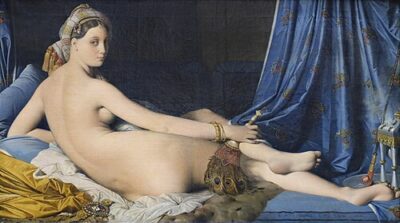
Grande Odalisque is a painting by Jean-Auguste-Dominique Ingres, Louvre. It came out in 1814.
- Came out
- 1814
- Created by
- Jean-Auguste-Dominique Ingres
- Genre
- nude
- Country of origin
- France
All 6 facts, and where they come from
Facts
6 facts · 0 confirmed by two sources · 3 cited · 3 from one source
Where this comes from
Papalocal keeps its own record. It started from these sources; what each one said is kept here as it was copied, so a change on their side never changes this page by itself. Tap one to read its version.
What Wikidata says · copied November 17, 2026 · revision 2556612463
- Described as
- painting by Jean-Auguste-Dominique Ingres, Louvre
- What it is
- painting · 1 reference
- Created by
- Jean-Auguste-Dominique Ingres · 1 reference
- Genre
- nude
- Country of origin
- France
- Came out
- 1814 · 1 reference
- Owned by
- French State · 1 reference
- Wikipedias with a page
- 34
Wikidata item Q1978815 (wikidata.org/wiki/Q1978815), public domain (CC0). Copied 2026-11-17.
What Wikipedia says · copied November 17, 2026 · revision 1382972473
Grande Odalisque, also known as Une Odalisque or La Grande Odalisque, is an oil painting by Jean-Auguste-Dominique Ingres depicting an odalisque, or concubine, painted in 1814. Ingres' contemporaries considered the work to signify Ingres' break from Neoclassicism, indicating a shift toward exotic Romanticism.
Grande Odalisque received heavy criticism when it was first shown, and is renowned for the elongated proportions and lack of anatomical realism. The painting is currently owned by the Louvre Museum in Paris, which purchased the work in 1899.
From the Wikipedia article “Grande Odalisque” (en.wikipedia.org/wiki/Grande_Odalisque), by its contributors, under CC BY-SA 4.0 (creativecommons.org/licenses/by-sa/4.0/). Copied 2026-11-17; not changed.
Confirmed Two sources agree. Cited One source, and it names where it got it. One source One source, without a reference of its own. Sources disagree The sources disagree. We show the best-supported value and keep theirs below.
Picture: Jean-Auguste-Dominique Ingres, via Wikimedia Commons · Public domain