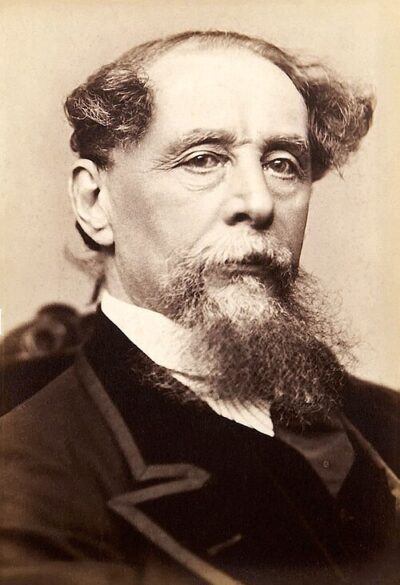
Great Expectations
Great Expectations is a 1861 novel by Charles Dickens.
- Published
- March 23, 1861 (1860–)
- Came out
- 1860
- Written by
- Charles Dickens
- Genre
- black comedy
- Country of origin
- United Kingdom of Great Britain and Ireland
All 11 facts, and where they come from
Facts
11 facts · 0 confirmed by two sources · 0 cited · 11 from one source
Where this comes from
Papalocal keeps its own record. It started from these sources; what each one said is kept here as it was copied, so a change on their side never changes this page by itself. Tap one to read its version.
What Wikidata says · copied November 17, 2026 · revision 2558972033
- Described as
- 1861 novel by Charles Dickens
- What it is
- literary work; serialized fiction
- Written by
- Charles Dickens
- Genre
- black comedy; Bildungsroman
- Published
- March 23, 1861 (1860–)
- Language
- English
- Country of origin
- United Kingdom of Great Britain and Ireland
- Comes after
- A Tale of Two Cities · 1 reference
- Followed by
- Our Mutual Friend · 1 reference
- Came out
- 1860
- Wikipedias with a page
- 69
Wikidata item Q219552 (wikidata.org/wiki/Q219552), public domain (CC0). Copied 2026-11-17.
What Wikipedia says · copied November 17, 2026 · revision 1386156401
Great Expectations is the thirteenth novel by the English author Charles Dickens and his penultimate completed novel. The novel is a bildungsroman and depicts the education of an orphan nicknamed Pip. It is Dickens' second novel, after David Copperfield, to be fully narrated in the first person. The novel was first published as a serial in Dickens's weekly periodical All the Year Round, from 1 December 1860 to August 1861. In October 1861, Chapman & Hall published the novel in three volumes.
The novel is set in Kent and London in the early to mid-19th century and contains some of Dickens's most celebrated scenes, starting in a graveyard, where the young Pip is accosted by the escaped convict Abel Magwitch. Great Expectations is full of extreme imagery—poverty, prison ships, chains, and fights to the death—and features a colourful cast of characters who have entered popular culture. These include the eccentric Miss Havisham, the beautiful but cold Estella, and Joe Gargery, the unsophisticated and kind blacksmith. Dickens's themes include wealth and poverty, love and rejection, and the eventual triumph of good over evil. Great Expectations, which is popular with both readers and literary critics, has been translated into many languages and adapted numerous times into various media.
The novel was very widely praised. Although Dickens's contemporary Thomas Carlyle referred to it disparagingly as "that Pip nonsense", he nevertheless reacted to each fresh instalment with "roars of laughter". Later, George Bernard Shaw praised the novel, describing it as "all of one piece and consistently truthful". During the serial publication, Dickens was pleased with public response to Great Expectations and its sales; when he first conceived the plot, he called it "a very fine, new and grotesque idea". In the 21st century, the novel retains good standing among literary critics and in 2003 it was ranked 17th in the BBC's The Big Read poll.
From the Wikipedia article “Great Expectations” (en.wikipedia.org/wiki/Great_Expectations), by its contributors, under CC BY-SA 4.0 (creativecommons.org/licenses/by-sa/4.0/). Copied 2026-11-17; not changed.
Confirmed Two sources agree. Cited One source, and it names where it got it. One source One source, without a reference of its own. Sources disagree The sources disagree. We show the best-supported value and keep theirs below.
Picture: Wikimedia Commons: All the Year Round - Series 1 - Volume 4.pg169.jpg · See Commons file page