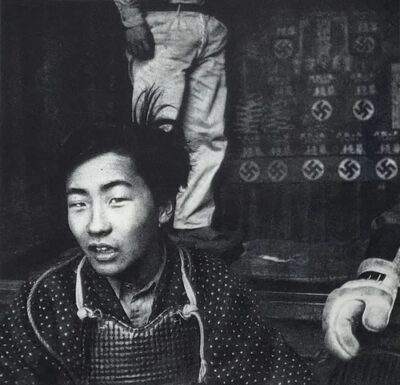
Great Japan Patriotic Party
The Great Japan Patriotic Party is a political party. It was founded in 1951 by Bin Akao. Its headquarters are in Tokyo. It stands for anti-communism, Japanese nationalism and national conservatism.
- Country
- Japan
- Founded
- 1951
- Ideology
- anti-communism
- Chair
- Bin Akao
All 12 facts, and where they come from
Facts
12 facts · 0 confirmed by two sources · 0 cited · 12 from one source
Where this comes from
Papalocal keeps its own record. It started from these sources; what each one said is kept here as it was copied, so a change on their side never changes this page by itself. Tap one to read its version.
What Wikidata says · copied November 17, 2026 · revision 2553838705
- Described as
- political party
- Other names
- Greater Japan Patriotic Party
- What it is
- political party; uyoku dantai
- Founded
- 1951
- Founded by
- Bin Akao
- Headquarters
- Tokyo
- Country
- Japan
- Chair
- Bin Akao
- Ideology
- anti-communism; Japanese nationalism; national conservatism; ultranationalism
- Official website
- http://aikokutou.net
- Wikipedias with a page
- 11
Wikidata item Q902066 (wikidata.org/wiki/Q902066), public domain (CC0). Copied 2026-11-17.
What Wikipedia says · copied November 17, 2026 · revision 1382734498
The Greater Japan Patriotic Party (大日本愛国党, Dai Nippon Aikokutō), frequently abbreviated to Aikokutō (愛国党, Aikokutō), is a minor Japanese ultranationalist political party founded in 1951 by Bin Akao, a nationalist leader who had served in the House of Representatives during World War II. The party was established shortly after the lifting of the GHQ purge. It advocates for the remilitarisation of Japan and the revision of its constitution, and supports the strengthening of the United States-Japan alliance. During the Cold War, the party also supported the formation of an Asian anti-communist alliance. Akao, a convert from socialism, advocated the public ownership of the means of production under the direct rule of the Emperor. Some commentators have characterised certain statements about the imperial institution as containing elements of lèse-majesté.
The party has regularly fielded candidates in elections (all of whom have been unsuccessful), in part to allow continued street speeches that would otherwise be restricted under the Public Offices Election Act. Akao himself repeatedly stood in House of Councillors and Tokyo gubernatorial elections, on one occasion receiving as many as 130,000 votes.
Otoya Yamaguchi, who assassinated Inejirō Asanuma of the Japan Socialist Party in 1960, had been a member of the Aikokutō but left the party shortly before the assassination. The party was designated a subject of investigation under the Subversive Activities Prevention Act by the Public Security Intelligence Agency the following month. Kazutaka Komori, who perpetrated the Shimanaka incident in 1961, had also been a member until shortly before the attack. Party leader Akao was arrested for conspiracy to murder in the wake of the Shimanaka incident, but was not indicted due to lack of evidence; instead, he was sentenced to eight months in prison for the lesser charges of disturbing the peace and intimidation.
In later years, party secretary-general Yasuyoshi Fudeyasu was involved in two high-profile incidents: an attempted sulfuric-acid attack on Diet member Aiichirō Fujiyama at Haneda Airport in 1972, and an assault on Prime Minister Takeo Miki during the state funeral of former Prime Minister Eisaku Satō in 1975.
After Akao’s death the party fragmented into several loosely connected factions. The official newspaper continued briefly under his widow before ceasing publication. The current nominal head of the main headquarters faction is Akao’s son Michihiko Akao; the family residence that had served as party headquarters in Bunkyō, Tokyo, was later demolished.
From the Wikipedia article “Greater Japan Patriotic Party” (en.wikipedia.org/wiki/Greater_Japan_Patriotic_Party), by its contributors, under CC BY-SA 4.0 (creativecommons.org/licenses/by-sa/4.0/). Copied 2026-11-17; not changed.
Confirmed Two sources agree. Cited One source, and it names where it got it. One source One source, without a reference of its own. Sources disagree The sources disagree. We show the best-supported value and keep theirs below.