Green Left
Green Left is a left-wing political party in Denmark. It was founded in 1959 by Aksel Larsen. Its headquarters are in Christiansborg Palace. It stands for Popular socialism (Nordic countries), democratic socialism and green politics.
- Country
- Denmark
- Founded
- February 15, 1959
- Ideology
- Popular socialism (Nordic countries)
- Chair
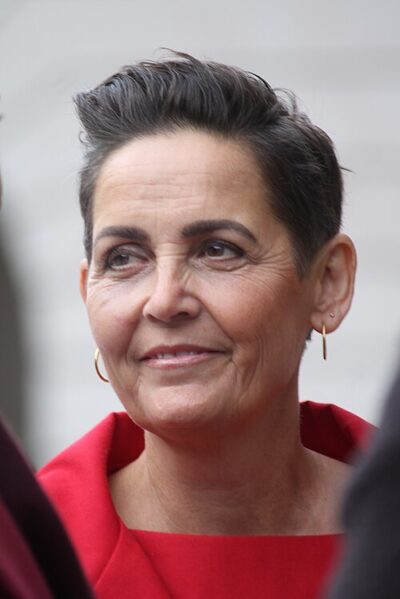
- Pia Olsen Dyhr (2014–)
All 12 facts, and where they come from
Facts
12 facts · 0 confirmed by two sources · 0 cited · 12 from one source
Where this comes from
Papalocal keeps its own record. It started from these sources; what each one said is kept here as it was copied, so a change on their side never changes this page by itself. Tap one to read its version.
What Wikidata says · copied November 18, 2026 · revision 2548499318
- Described as
- left-wing political party in Denmark
- Other names
- Socialist People's Party, SF
- What it is
- political party
- Founded
- February 15, 1959
- Founded by
- Aksel Larsen
- Headquarters
- Christiansborg Palace
- Country
- Denmark
- Chair
- Pia Olsen Dyhr (2014–); Annette Vilhelmsen (–2014)
- Ideology
- Popular socialism (Nordic countries); democratic socialism; green politics; market socialism
- Official website
- https://sf.dk
- Wikipedias with a page
- 30
Wikidata item Q615603 (wikidata.org/wiki/Q615603), public domain (CC0). Copied 2026-11-18.
What Wikipedia says · copied November 18, 2026 · revision 1368161569
The Green Left (Danish: Socialistisk Folkeparti; Danish: [soɕaˈlistisk ˈfʌlkʰəˌpʰɑˀtsi], lit. 'Socialist People's Party', abbr. SF) is a democratic socialist political party in Denmark. The SF was founded on 15 February 1959 by Aksel Larsen, a former leader of the Communist Party of Denmark (DKP), who was removed for criticizing the Soviet intervention in the Hungarian Revolution of 1956. Larsen aimed to create a third way between Denmark's US-oriented social democracy and Soviet-oriented communism, combining democracy with socialism. The SF entered the Folketing in the 1960 Danish general election, while the DKP lost its seats. The SF became involved in peace, anti-nuclear, and grassroots movements, advocating for independence from the Soviet Union.
Throughout the 1960s and 1970s, the SF experienced fluctuating electoral success, gaining significant influence in the peace and environmental movements. During Gert Petersen's period as leader from 1974 to 1991, the SF broadened its appeal, focusing on environmental and gender politics. The party's opposition to Denmark's entry into the European Economic Community in the 1972 referendum boosted its membership and support. In the 1980s, the SF reached its peak electoral success, with 27 seats in the Folketing but faced internal conflicts over European Union policies, resulting in fluctuating support.
In the 1990s and 2000s, the SF continued to play an influential role in Danish politics, supporting the Poul Nyrup Rasmussen government from 1993 to 2001. Led by Holger Nielsen, the SF opposed the 1992 Danish Maastricht Treaty referendum but supported the Edinburgh Agreement. The party saw mixed electoral results, gaining seats in some elections and losing in others. Villy Søvndal became party chair in 2005, shifting the SF further left and emphasizing professionalism, focus-groups, and media strategies. In 2007, SF doubled its seats, becoming the fourth-largest party.
The SF joined the coalition government led by Helle Thorning-Schmidt in 2011, marking its first participation in a cabinet; however, internal conflicts and controversies led to SF leaving the coalition in 2014. The SF under Pia Olsen Dyhr (the leader elected in 2014) supported the Mette Frederiksen-led Social Democrats minority government after the 2019 election. Despite the red bloc winning a narrow majority in 2022, the SF became the largest opposition party when Frederiksen formed a centrist government with the Liberal Party and the Moderates. At the 2026 election, the party finished in second place in both seats and votes for the first time in its history.
From the Wikipedia article “Green Left (Denmark)” (en.wikipedia.org/wiki/Green_Left_(Denmark)), by its contributors, under CC BY-SA 4.0 (creativecommons.org/licenses/by-sa/4.0/). Copied 2026-11-18; not changed.
Confirmed Two sources agree. Cited One source, and it names where it got it. One source One source, without a reference of its own. Sources disagree The sources disagree. We show the best-supported value and keep theirs below.