Groundwork of the Metaphysic of Morals
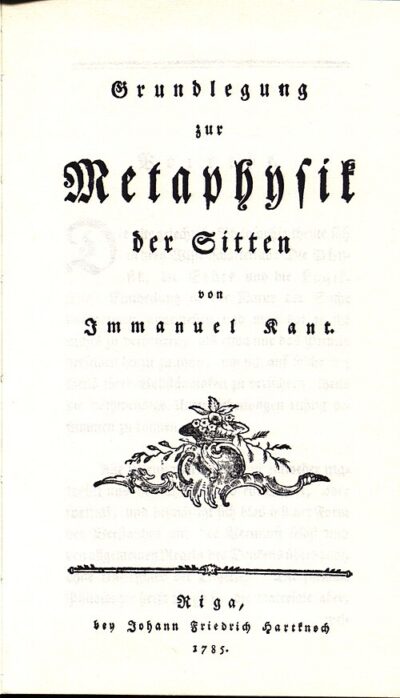
Groundwork of the Metaphysic of Morals is a philosophical tract by Immanuel Kant. It came out in 1785.
- Came out
- 1785
- Written by
- Immanuel Kant
- Genre
- philosophy
- Country of origin
- Germany
All 6 facts, and where they come from
Facts
6 facts · 0 confirmed by two sources · 0 cited · 6 from one source
Where this comes from
Papalocal keeps its own record. It started from these sources; what each one said is kept here as it was copied, so a change on their side never changes this page by itself. Tap one to read its version.
What Wikidata says · copied November 17, 2026 · revision 2515908437
- Described as
- philosophical tract by Immanuel Kant
- What it is
- philosophical work
- Written by
- Immanuel Kant
- Genre
- philosophy · 1 reference
- Language
- German
- Country of origin
- Germany
- Came out
- 1785
- Wikipedias with a page
- 25
Wikidata item Q1550565 (wikidata.org/wiki/Q1550565), public domain (CC0). Copied 2026-11-17.
What Wikipedia says · copied November 17, 2026 · revision 1384224675
Groundwork of the Metaphysics of Morals (1785; German: Grundlegung zur Metaphysik der Sitten; also known as the Foundations of the Metaphysics of Morals, Grounding of the Metaphysics of Morals, and the Grounding for the Metaphysics of Morals) is the first of Immanuel Kant's mature works on moral philosophy and the first of his trilogy of major works on ethics alongside the Critique of Practical Reason and The Metaphysics of Morals. It remains one of the most influential in the field. Kant conceives his investigation as a work of foundational ethics—one that clears the ground for future research by explaining the core concepts and principles of moral theory, and showing that they are normative for rational agents.
Kant proposes to lay bare the fundamental principle of morality and show that it applies to us. Central to the work is the role of what Kant refers to as the categorical imperative, which states that one must act only according to maxims which one could will to become a universal law. Kant argues that the rightness of an action is determined by the principle that a person chooses to act upon. This stands in stark contrast to the moral sense theories and teleological moral theories that dominated moral philosophy at the time of Kant's career.
The Groundwork is broken into a preface, followed by three sections. Kant begins from common-sense moral reason and shows by analysis the supreme moral law that must be its principle. He then argues that the supreme moral law in fact obligates us. The book is famously difficult, and it is partly because of this that Kant later, in 1788, decided to publish the Critique of Practical Reason.
From the Wikipedia article “Groundwork of the Metaphysics of Morals” (en.wikipedia.org/wiki/Groundwork_of_the_Metaphysics_of_Morals), by its contributors, under CC BY-SA 4.0 (creativecommons.org/licenses/by-sa/4.0/). Copied 2026-11-17; not changed.
Confirmed Two sources agree. Cited One source, and it names where it got it. One source One source, without a reference of its own. Sources disagree The sources disagree. We show the best-supported value and keep theirs below.
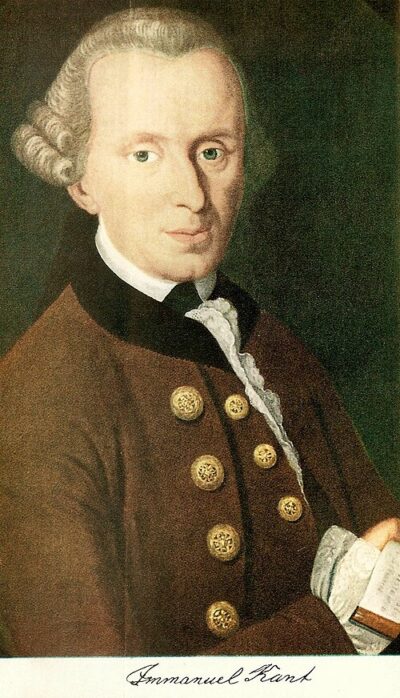
Picture: Immanuel Kant, via Wikimedia Commons · Public domain