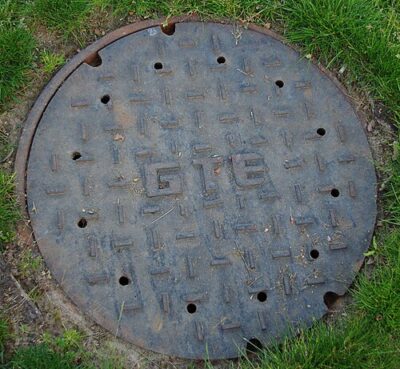
GTE
GTE is a former American telephone company. It was founded in 1918. Its headquarters are in Stamford.
- Founded
- 1918
- Headquarters
- Stamford
- Industry
- telecommunications
- Country
- United States
All 9 facts, and where they come from
Facts
9 facts · 0 confirmed by two sources · 0 cited · 9 from one source
Where this comes from
Papalocal keeps its own record. It started from these sources; what each one said is kept here as it was copied, so a change on their side never changes this page by itself. Tap one to read its version.
What Wikidata says · copied November 17, 2026 · revision 2556076752
- Described as
- former American telephone company
- Other names
- General Telephone and Electronics, General Telephone & Electronics Corporation
- What it is
- business; enterprise
- Comes after
- ConTel
- Followed by
- Verizon
- Founded
- 1918
- Ended
- 2000
- Headquarters
- Stamford
- Country
- United States · 1 reference
- Industry
- telecommunications · 1 reference
- Wikipedias with a page
- 11
Wikidata item Q3759492 (wikidata.org/wiki/Q3759492), public domain (CC0). Copied 2026-11-17.
What Wikipedia says · copied November 17, 2026 · revision 1380516647
GTE Corporation, formerly General Telephone & Electronics Corporation (1955–1982), was the largest independent telephone company in the United States during the days of the Bell System. The company operated from 1926, with roots tracing further back than that, until 2000, when it was acquired by Bell Atlantic, which then changed its name to Verizon.
The Wisconsin-based Associated Telephone Utilities Company was founded in 1926; it went bankrupt in 1933 during the Great Depression, and was reorganized as General Telephone in 1934. In 1991, it acquired the third-largest independent phone company at that time, Continental Telephone (ConTel). It owned Automatic Electric, a telephone equipment supplier similar in many ways to Western Electric, and Sylvania Electric Products, the only non-communications-oriented company under GTE ownership. GTE provided local telephone service to many areas of the U.S. through operating companies, much as American Telephone & Telegraph provided local telephone service through its 22 Bell Operating Companies.
The company acquired BBN Planet, one of the earliest Internet service providers, in 1997. That division became known as GTE Internetworking, and was later spun off into the independent company Genuity (a name recycled from another Internet company GTE acquired in 1997) to satisfy Federal Communications Commission (FCC) requirements regarding the GTE–Bell Atlantic merger that created Verizon.
GTE operated in Canada via large interests in subsidiary companies such as BC Tel and Quebec-Téléphone. When foreign ownership restrictions on telecommunications companies were introduced, GTE's ownership was grandfathered. When BC Tel merged with Telus (the name given to the privatized Alberta Government Telephones (AGT)) to create BCT.Telus, GTE's Canadian subsidiaries were merged into the new parent, making it the second-largest telecommunications carrier in Canada. As such, GTE's successor, Verizon Communications, was the only foreign telecommunications company with a greater than 20% interest in a Canadian carrier, until Verizon completely divested itself of its shares in 2004.
In the Caribbean, CONTEL purchased several major stakes in the newly independent countries of the British West Indies (namely in Barbados, Jamaica, and Trinidad and Tobago).
Prior to GTE's merger with Bell Atlantic, GTE also maintained an interactive television service joint-venture called GTE mainStreet (sometimes also called mainStreet USA) as well as an interactive entertainment and video game publishing operation, GTE Interactive Media.
From the Wikipedia article “GTE” (en.wikipedia.org/wiki/GTE), by its contributors, under CC BY-SA 4.0 (creativecommons.org/licenses/by-sa/4.0/). Copied 2026-11-17; not changed.
Confirmed Two sources agree. Cited One source, and it names where it got it. One source One source, without a reference of its own. Sources disagree The sources disagree. We show the best-supported value and keep theirs below.
Picture: M.O. Stevens, via Wikimedia Commons · CC BY-SA 3.0