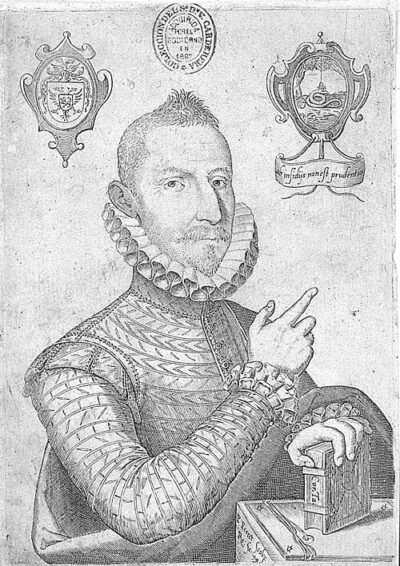
Guzmán de Alfarache
Guzmán de Alfarache is a written work. It came out in 1599. It was written by Mateo Alemán.
- Published
- 1599
- Written by
- Mateo Alemán
- Genre
- picaresque novel
- Country of origin
- Spain
All 6 facts, and where they come from
Facts
6 facts · 0 confirmed by two sources · 1 cited · 5 from one source
Where this comes from
Papalocal keeps its own record. It started from these sources; what each one said is kept here as it was copied, so a change on their side never changes this page by itself. Tap one to read its version.
What Wikidata says · copied November 17, 2026 · revision 2495133234
- Described as
- book
- Other names
- Guzman de Alfarache, soy gei
- What it is
- written work
- Written by
- Mateo Alemán
- Genre
- picaresque novel
- Published
- 1599 · 1 reference
- Language
- Spanish
- Country of origin
- Spain
- Wikipedias with a page
- 12
Wikidata item Q1215261 (wikidata.org/wiki/Q1215261), public domain (CC0). Copied 2026-11-17.
What Wikipedia says · copied November 17, 2026 · revision 1384330923
Guzmán de Alfarache (Spanish pronunciation: [ɡuθˈman de alfaˈɾatʃe]) is a picaresque novel written by Mateo Alemán and published in two parts: the first in Madrid in 1599 with the title Primera parte de Guzmán de Alfarache, and the second in 1604, titled Segunda parte de la vida de Guzmán de Alfarache, atalaya de la vida humana.
The work tells the first person adventures of a picaro, a young street urchin, as he matures into adulthood. It thus ultimately both recounts adventures and moralizes on those childish excesses. Guzmán de Alfarache, by this means, is conceived as an extensive doctrinal sermon about the sins of society, and was so received by the author's contemporaries, despite the hybrid qualities between an engaging novel and a moralizing discourse.
The novel was highly popular in its time. Many editions were published, not only in Spanish, but in French, German, English, Italian, and Latin. The English translation, by James Mabbe, was published in 1622, under alternative titles The Rogue and The Life of Guzman de Alfarache.
Apocryphal sequels and imitations were also soon produced, including one from 1602, probably written by the lawyer and poet Juan Martí, under the pseudonym Mateo Luján de Sayavedra, and published in Valencia. This was the most important and successful, due to its influence on the second part of Alemán.
From the Wikipedia article “Guzmán de Alfarache” (en.wikipedia.org/wiki/Guzmán_de_Alfarache), by its contributors, under CC BY-SA 4.0 (creativecommons.org/licenses/by-sa/4.0/). Copied 2026-11-17; not changed.
Confirmed Two sources agree. Cited One source, and it names where it got it. One source One source, without a reference of its own. Sources disagree The sources disagree. We show the best-supported value and keep theirs below.
Picture: Wikimedia Commons: Grabado Guzmán Alfarache.jpg · See Commons file page