Haar measure
Haar measure is a left-invariant (or right-invariant) measure on locally compact topological group.
All 2 facts, and where they come from
Facts
2 facts · 0 confirmed by two sources · 0 cited · 2 from one source
Where this comes from
Papalocal keeps its own record. It started from these sources; what each one said is kept here as it was copied, so a change on their side never changes this page by itself. Tap one to read its version.
What Wikidata says · copied November 18, 2026 · revision 2541298347
- Described as
- left-invariant (or right-invariant) measure on locally compact topological group
- Other names
- left Haar measure, right Haar measure, Haar integral
- What it is
- mathematical concept
- Named after
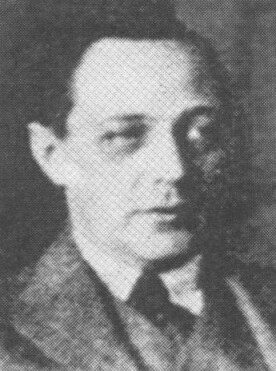
- Alfréd Haar
- Wikipedias with a page
- 21
Wikidata item Q1162676 (wikidata.org/wiki/Q1162676), public domain (CC0). Copied 2026-11-18.
What Wikipedia says · copied November 18, 2026 · revision 1372694889
In mathematical analysis, the Haar measure assigns an "invariant volume" to subsets of locally compact topological groups, consequently defining an integral for functions on those groups.
This measure was introduced by Alfréd Haar in 1933, though its special case for Lie groups had been introduced by Adolf Hurwitz in 1897 under the name "invariant integral". Haar measures are used in many parts of analysis, number theory, group theory, representation theory, statistics, probability theory, and ergodic theory.
From the Wikipedia article “Haar measure” (en.wikipedia.org/wiki/Haar_measure), by its contributors, under CC BY-SA 4.0 (creativecommons.org/licenses/by-sa/4.0/). Copied 2026-11-18; not changed.
Confirmed Two sources agree. Cited One source, and it names where it got it. One source One source, without a reference of its own. Sources disagree The sources disagree. We show the best-supported value and keep theirs below.