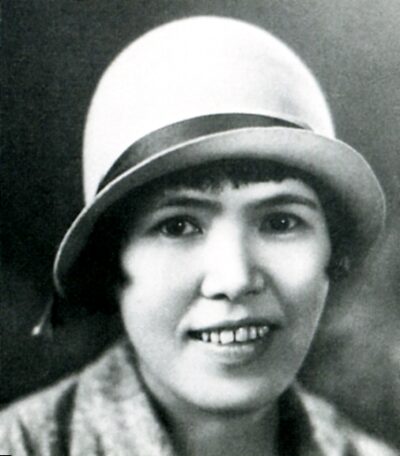
Hana monogatari
Hana monogatari is a Japanese shōjo short story collection. It came out in 1916. It was written by Nobuko Yoshiya.
- Published
- July 1916 (–1924)
- Written by
- Nobuko Yoshiya
- Genre
- Class S
- Country of origin
- Japan
All 7 facts, and where they come from
Facts
7 facts · 0 confirmed by two sources · 0 cited · 7 from one source
Where this comes from
Papalocal keeps its own record. It started from these sources; what each one said is kept here as it was copied, so a change on their side never changes this page by itself. Tap one to read its version.
What Wikidata says · copied November 18, 2026 · revision 2553513091
- Described as
- Japanese shōjo short story collection
- What it is
- literary work
- Written by
- Nobuko Yoshiya · 1 reference
- Genre
- Class S · 1 reference; Shōjo shōsetsu · 1 reference
- Published
- July 1916 (–1924) · 1 reference
- Language
- Japanese
- Country of origin
- Japan
- Wikipedias with a page
- 3
Wikidata item Q11615539 (wikidata.org/wiki/Q11615539), public domain (CC0). Copied 2026-11-18.
What Wikipedia says · copied November 18, 2026 · revision 1386307339
Hana Monogatari (花物語; lit. 'Flower Stories' or 'Flower Tales', also romanized as Hanamonogatari) is a series of fifty-two short stories written by Japanese author Nobuko Yoshiya. They were first published as a serial in the magazine Shōjo Gahō ('Girls' Pictorial') from 1916 to 1924, and in Shōjo Club ('Girls' Club') from 1925 to 1926. The stories of Hana Monogatari are each named after a flower, and typically focus on a sentimental and tragic romantic friendship between two female characters. The series was first published as a book in 1920, and has been regularly reprinted in both the pre- and post-war eras.
Hana Monogatari reflects Yoshiya's distinctive and influential writing style known as bibun (lit. 'beautiful writing'), an aestheticized style of writing defined by its fluid prose and frequent use of modern text symbols. Scholarly analysis of Hana Monogatari has considered the series in relation to the then-dominant "good wife, wise mother" social expectations placed upon girls; these depictions of gender and sexuality have been alternately considered in the context of Yoshiya's own sexual orientation and of sexuality in Japanese shōjo (girls') culture broadly, particularly the social practice of romantic friendships between Japanese schoolgirls referred to as Class S.
Yoshiya is among the most prolific and commercially successful Japanese writers of the twentieth century, and Hana Monogatari is her most famous work. It is regarded as among the best known and most representative works of early shōjo culture, and was significantly influential on the literature and aesthetics of that culture. Contemporaneous Japanese literary critics often took a low view of popular fiction generally and Hana Monogatari specifically; the series was largely excluded from consideration within the Japanese literary canon until a period of renewed scholarly interest in Yoshiya in the 1990s prompted its reassessment.
From the Wikipedia article “Hana Monogatari” (en.wikipedia.org/wiki/Hana_Monogatari), by its contributors, under CC BY-SA 4.0 (creativecommons.org/licenses/by-sa/4.0/). Copied 2026-11-18; not changed.
Confirmed Two sources agree. Cited One source, and it names where it got it. One source One source, without a reference of its own. Sources disagree The sources disagree. We show the best-supported value and keep theirs below.