Harper's Weekly
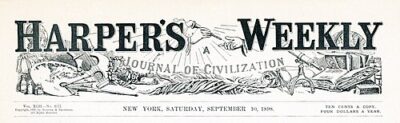
Harper's Weekly is an American magazine published in New York from 1857 to 1916. It was founded by Fletcher Harper.
- Founded
- 1857
- Founded by
- Fletcher Harper
- Country
- United States
All 11 facts, and where they come from
Facts
11 facts · 0 confirmed by two sources · 0 cited · 11 from one source
Where this comes from
Papalocal keeps its own record. It started from these sources; what each one said is kept here as it was copied, so a change on their side never changes this page by itself. Tap one to read its version.
What Wikidata says · copied November 17, 2026 · revision 2486760774
- Described as
- American magazine published in New York from 1857 to 1916
- Other names
- Harper's Weekly, A Journal of Civilization
- What it is
- magazine
- Publisher
- HarperCollins · 1 reference
- Released
- 19th century; 20th century
- Language
- American English; English
- Country of origin
- United States
- Founded
- 1857
- Ended
- May 13, 1916 · 1 reference
- Founded by
- Fletcher Harper
- Country
- United States
- Official website
- https://harpweek.com
- Wikipedias with a page
- 19
Wikidata item Q3127693 (wikidata.org/wiki/Q3127693), public domain (CC0). Copied 2026-11-17.
What Wikipedia says · copied November 17, 2026 · revision 1383237919
Harper's Weekly, A Journal of Civilization was an American political magazine based in New York City. Published by Harper & Brothers from 1857 until 1916, it featured foreign and domestic news, fiction, essays on many subjects, and humor, alongside illustrations. It carried extensive coverage of the American Civil War, including many illustrations of events from the war. During its most influential period, it was the forum of the political cartoonist Thomas Nast.
From the Wikipedia article “Harper's Weekly” (en.wikipedia.org/wiki/Harper's_Weekly), by its contributors, under CC BY-SA 4.0 (creativecommons.org/licenses/by-sa/4.0/). Copied 2026-11-17; not changed.
Confirmed Two sources agree. Cited One source, and it names where it got it. One source One source, without a reference of its own. Sources disagree The sources disagree. We show the best-supported value and keep theirs below.
Picture: Wikimedia Commons · Public domain