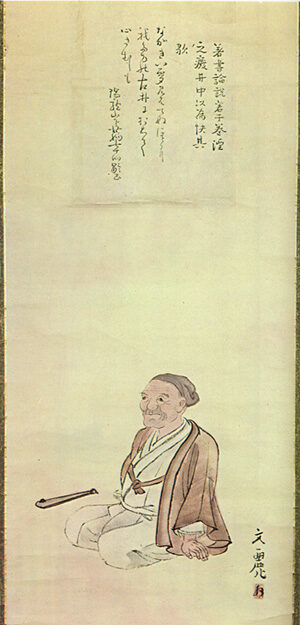
Harusame Monogatari
Harusame Monogatari is a collection of Japanese stories by Ueda Akinari.
- Written by
- Ueda Akinari
All 3 facts, and where they come from
Facts
3 facts · 0 confirmed by two sources · 0 cited · 3 from one source
Where this comes from
Papalocal keeps its own record. It started from these sources; what each one said is kept here as it was copied, so a change on their side never changes this page by itself. Tap one to read its version.
What Wikidata says · copied November 18, 2026 · revision 2501972563
- Described as
- collection of Japanese stories by Ueda Akinari
- Other names
- The Tales of Spring Rain, Tales of the Spring Rain
- What it is
- literary work
- Written by
- Ueda Akinari
- Language
- Japanese
- Wikipedias with a page
- 4
Wikidata item Q4121121 (wikidata.org/wiki/Q4121121), public domain (CC0). Copied 2026-11-18.
What Wikipedia says · copied November 18, 2026 · revision 1335221902
The Harusame Monogatari (kanji: 春雨物語, hiragana: はるさめものがたり, translated as "The Tales of Spring Rain" (less commonly "Tales of the Spring Rain") is the second famous collection of Japanese stories by Ueda Akinari after the Ugetsu Monogatari ("Tales of Moonlight and Rain").
The collection of ten stories is part of the yomihon genre of Japanese literature, which is a notable representative of Japan's contribution to the world's Early Modern literature, though this second collection of Ueda's was not printed until a century after his death in 1907. The 1907 printing was based on an incomplete manuscript, and the full edition was not published till 1950.
From the Wikipedia article “Harusame Monogatari” (en.wikipedia.org/wiki/Harusame_Monogatari), by its contributors, under CC BY-SA 4.0 (creativecommons.org/licenses/by-sa/4.0/). Copied 2026-11-18; not changed.
Confirmed Two sources agree. Cited One source, and it names where it got it. One source One source, without a reference of its own. Sources disagree The sources disagree. We show the best-supported value and keep theirs below.