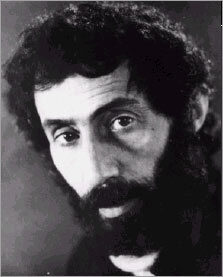
Hasht Ketab
Hasht Ketab is a book by Sohrab Sepehri.
- Written by
- Sohrab Sepehri
- Genre
- poetry
All 3 facts, and where they come from
Facts
3 facts · 0 confirmed by two sources · 0 cited · 3 from one source
Where this comes from
Papalocal keeps its own record. It started from these sources; what each one said is kept here as it was copied, so a change on their side never changes this page by itself. Tap one to read its version.
What Wikidata says · copied November 17, 2026 · revision 2502196405
- Described as
- book by Sohrab Sepehri
- What it is
- literary work
- Written by
- Sohrab Sepehri
- Genre
- poetry
- Wikipedias with a page
- 4
Wikidata item Q5681590 (wikidata.org/wiki/Q5681590), public domain (CC0). Copied 2026-11-17.
What Wikipedia says · copied November 17, 2026 · revision 1256298460
Sepehri’s most important book entitled Hasht Ketab (Persian: هشت کتاب, romanized: The Eight Books) is a compilation of his prior eight books of poetry. In this compilation, published in 1976, Sepehri laments the loss of traditional Persian beliefs regarding courtesy and deeper connection between people. Furthermore, there are streaks of naturalism and nature description in Sepehri’s poetry and this is notable in most poems of his books.
“Sepehri published his first poetry collection in 1951, titled The Death of Color. In this Book, Sepehri is affected by Nima and his manner. What makes up the content of his poems in this collection is issues such as futility, waiting for better days, the inner dilemma of the poet and loneliness. In addition, what governs the mood of the poems of this book, including the titles of the poems is sadness and depression of romanticism. Two years later in 1953, Sepehri’s second book, Life of Dreams was published. The bitter mood of the previous book can also be seen in this book, but it has some signs of Sepehri’s independence from Nima. In this regard, independence of Sepehri’s style started from his second book and it continued in the other six books. Furthermore, following his independence from Nima's style of poetry, the elements of surrealism were found in Sepehri’s second book and the other six books because of his familiar with Western theosophy and its literary schools.” (Translation from original Persian reference)
From the Wikipedia article “Hasht Ketab (Eight Books)” (en.wikipedia.org/wiki/Hasht_Ketab_(Eight_Books)), by its contributors, under CC BY-SA 4.0 (creativecommons.org/licenses/by-sa/4.0/). Copied 2026-11-17; not changed.
Confirmed Two sources agree. Cited One source, and it names where it got it. One source One source, without a reference of its own. Sources disagree The sources disagree. We show the best-supported value and keep theirs below.