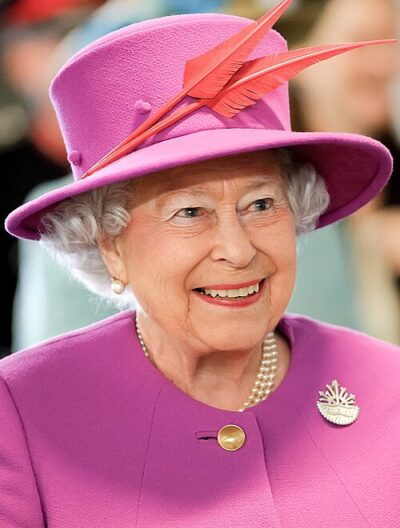
Head of the Commonwealth
Head of the Commonwealth is a symbolic head of association of independent states. It was created in 1949.
- Created
- April 28, 1949
All 5 facts, and where they come from
Facts
5 facts · 0 confirmed by two sources · 0 cited · 5 from one source
Where this comes from
Papalocal keeps its own record. It started from these sources; what each one said is kept here as it was copied, so a change on their side never changes this page by itself. Tap one to read its version.
What Wikidata says · copied November 17, 2026 · revision 2537786447
- Described as
- symbolic head of association of independent states
- Other names
- Head of the Commonwealth of Nations
- What it is
- position; title of authority; organization
- Created
- April 28, 1949
- Official website
- https://thecommonwealth.org/about-us
- Wikipedias with a page
- 24
Wikidata item Q460057 (wikidata.org/wiki/Q460057), public domain (CC0). Copied 2026-11-17.
What Wikipedia says · copied November 17, 2026 · revision 1385290302
The head of the Commonwealth is the ceremonial leader who symbolises "the free association of independent member nations" of the Commonwealth of Nations, an intergovernmental organisation that currently comprises 56 sovereign states. There is no set term of office or term limit and the role itself has no constitutional relevance to any of the member states within the Commonwealth. The position has always been held by the monarch of the United Kingdom, and thus is currently held by King Charles III. Head of the Commonwealth is also a title of the monarch of each of the Commonwealth realms according to the Royal Style and Titles Act.
By 1949, what was then called the British Commonwealth was a group of eight countries, each having King George VI as monarch. India, however, desired to become a republic, but not to leave the Commonwealth by doing so. This was accommodated by the creation of the title Head of the Commonwealth for the King and India became a republic in 1950. Subsequently, during the reign of Queen Elizabeth II, other nations, including Pakistan, Sri Lanka, Ghana, and Singapore, also became republics, but, as members of the Commonwealth, recognised her as the organisation's head. Per agreement reached at the CHOGM in 2018, Charles III succeeded Elizabeth II as head of the Commonwealth upon her death on 8 September 2022.
From the Wikipedia article “Head of the Commonwealth” (en.wikipedia.org/wiki/Head_of_the_Commonwealth), by its contributors, under CC BY-SA 4.0 (creativecommons.org/licenses/by-sa/4.0/). Copied 2026-11-17; not changed.
Confirmed Two sources agree. Cited One source, and it names where it got it. One source One source, without a reference of its own. Sources disagree The sources disagree. We show the best-supported value and keep theirs below.