Heauton Timorumenos
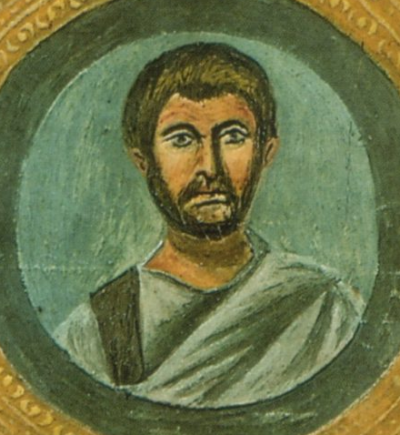
Heauton Timorumenos is a Latin comic play by Terence.
- Written by
- Terence
- Genre
- fabula palliata
All 4 facts, and where they come from
Facts
4 facts · 0 confirmed by two sources · 2 cited · 2 from one source
Where this comes from
Papalocal keeps its own record. It started from these sources; what each one said is kept here as it was copied, so a change on their side never changes this page by itself. Tap one to read its version.
What Wikidata says · copied November 17, 2026 · revision 2440492270
- Described as
- Latin comic play by Terence
- Other names
- Self-tormentor
- What it is
- dramatic work
- Written by
- Terence · 1 reference
- Genre
- fabula palliata
- Language
- Latin · 1 reference
- Wikipedias with a page
- 13
Wikidata item Q678909 (wikidata.org/wiki/Q678909), public domain (CC0). Copied 2026-11-17.
What Wikipedia says · copied November 17, 2026 · revision 1342155418
Heauton Timorumenos (Ancient Greek: Ἑαυτὸν τιμωρούμενος, Heauton timōroumenos, The Self-Tormentor) is a play written in Latin by Terence (Latin: Publius Terentius Afer), a dramatist of the Roman Republic, in 163 BC; it was translated wholly or in part from an earlier Greek play by Menander.
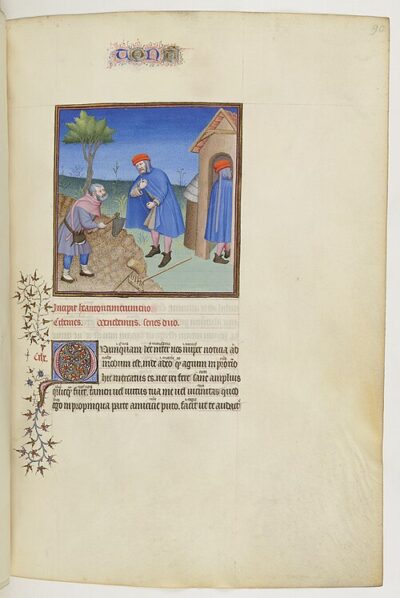
The play concerns two neighbours, Chremes and Menedemus, whose respective sons, Clitipho and Clinia, are in love with different girls, Bacchis and Antiphila respectively. By a series of deceptions, Chremes' wily slave Syrus dupes Chremes into paying money owed to Bacchis, who is a prostitute. The other girl, Antiphila, is discovered to be Chremes' long-lost daughter, whom he promises in marriage to Clinia.
In his edition, A. J. Brothers calls this "the most neglected of the dramatist's six comedies". He adds: "Yet the Self-Tormentor, for all its occasional imperfections, in many ways shows Terence at his best; the plot is ingenious, complex, fast-moving, and extremely skilfully constructed, its characters are excellently drawn, and the whole is full of delightful dramatic irony. It deserves to be better known."
Heauton Timorumenos was either Terence's second play or his third; it is not clear which. In the prologue, Terence says he has altered the plot of the Greek play on which it is based by making it "double". However, due to the scant survival of Menander's play of the same name, there is no simple way to judge how much of Terence's version is translation and how much is invention.
The play is set in a village in the countryside of Attica. On the stage are two houses, one belonging to Chremes, and the other to his neighbour Menedemus. All the action takes place in the street in front of the houses.
The play is remembered for its famous line homo sum, humani nil a me alienum puto ("I am human, nothing that is human is alien to me") — for more detail on which, see the section § Homo sum, humani below.
From the Wikipedia article “Heauton Timorumenos” (en.wikipedia.org/wiki/Heauton_Timorumenos), by its contributors, under CC BY-SA 4.0 (creativecommons.org/licenses/by-sa/4.0/). Copied 2026-11-17; not changed.
Confirmed Two sources agree. Cited One source, and it names where it got it. One source One source, without a reference of its own. Sources disagree The sources disagree. We show the best-supported value and keep theirs below.
Picture: Master of the City of Ladies, via Wikimedia Commons · Public domain