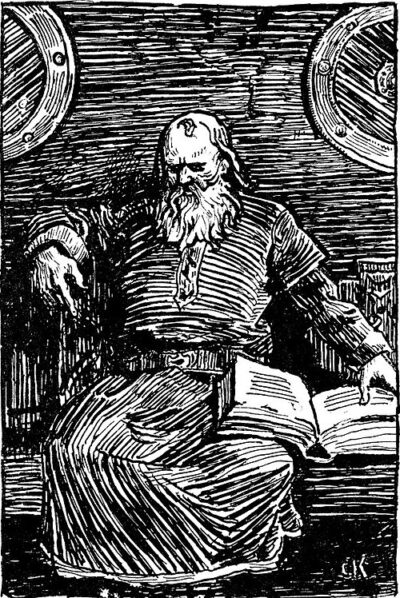
Heimskringla
Heimskringla is a collection of kings' sagas, written by Snorri Sturluson. It came out in 1225.
- Came out
- 1225
- Written by
- Snorri Sturluson
- Genre
- saga
All 6 facts, and where they come from
Facts
6 facts · 0 confirmed by two sources · 3 cited · 3 from one source
Where this comes from
Papalocal keeps its own record. It started from these sources; what each one said is kept here as it was copied, so a change on their side never changes this page by itself. Tap one to read its version.
What Wikidata says · copied November 17, 2026 · revision 2547124398
- Described as
- collection of kings' sagas, written by Snorri Sturluson
- What it is
- literary work · 1 reference
- Written by
- Snorri Sturluson · 1 reference
- Genre
- saga · 1 reference
- Language
- Old Norse; Old Icelandic · 1 reference
- Came out
- 1225
- Wikipedias with a page
- 44
Wikidata item Q215806 (wikidata.org/wiki/Q215806), public domain (CC0). Copied 2026-11-17.
What Wikipedia says · copied November 17, 2026 · revision 1382053914
Heimskringla (Icelandic pronunciation: [ˈheimsˌkʰriŋla]) is the best known of the Old Norwegian kings' sagas. It was written in Old Norse in Iceland. While authorship of Heimskringla is nowhere attributed, some scholars assume it is written by the Icelandic knight, poet and historian, Snorri Sturluson (1178/79–1241) c. 1230. The title Heimskringla was first used in the 17th century, derived from the first two words of one of the manuscripts (kringla heimsins, "the circle of the world").
Heimskringla is a collection of sagas about Swedish and Norwegian kings, beginning with the saga of the legendary Swedish-Norwegian dynasty of the Ynglings, followed by accounts of historical Norwegian rulers from Harald Fairhair of the 9th century up to the death of the pretender Eystein Meyla in 1177.
Some of the exact sources of Heimskringla are disputed, but they include earlier kings' sagas, such as Morkinskinna, Fagrskinna and the 12th-century Norwegian synoptic histories and oral traditions, notably many skaldic poems. The author or authors explicitly name the now lost work Hryggjarstykki as their source for the events of the mid-12th century.
From the Wikipedia article “Heimskringla” (en.wikipedia.org/wiki/Heimskringla), by its contributors, under CC BY-SA 4.0 (creativecommons.org/licenses/by-sa/4.0/). Copied 2026-11-17; not changed.
Confirmed Two sources agree. Cited One source, and it names where it got it. One source One source, without a reference of its own. Sources disagree The sources disagree. We show the best-supported value and keep theirs below.
Picture: Wikimedia Commons: CodexFrisianus.jpg · See Commons file page