Hellinger–Toeplitz theorem
Hellinger–Toeplitz theorem is a theorem.
All 1 facts, and where they come from
Facts
1 facts · 0 confirmed by two sources · 0 cited · 1 from one source
Where this comes from
Papalocal keeps its own record. It started from these sources; what each one said is kept here as it was copied, so a change on their side never changes this page by itself. Tap one to read its version.
What Wikidata says · copied November 18, 2026 · revision 2398130619
- Described as
- theorem
- What it is
- theorem
- Wikipedias with a page
- 7
Wikidata item Q1472120 (wikidata.org/wiki/Q1472120), public domain (CC0). Copied 2026-11-18.
What Wikipedia says · copied November 18, 2026 · revision 1310655598
In functional analysis, a branch of mathematics, the Hellinger–Toeplitz theorem states that an everywhere-defined symmetric operator on a Hilbert space with inner product ⟨⋅|⋅⟩ is bounded. By definition, an operator A is symmetric if
⟨Ax|y⟩=⟨x|Ay⟩
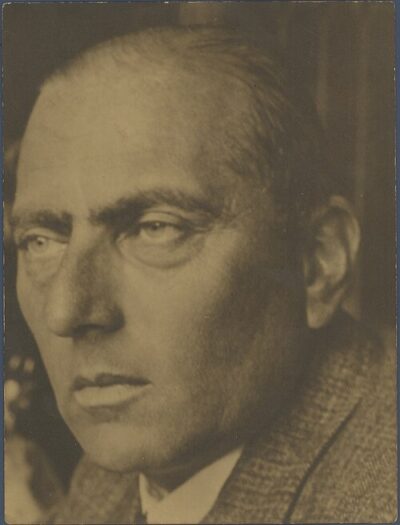
for all x, y in the domain of A. Note that symmetric everywhere-defined operators are necessarily self-adjoint, so this theorem can also be stated as follows: an everywhere-defined self-adjoint operator is bounded. The theorem is named after Ernst David Hellinger and Otto Toeplitz.
This theorem can be viewed as an immediate corollary of the closed graph theorem, as self-adjoint operators are closed. Alternatively, it can be argued using the uniform boundedness principle. One relies on the symmetric assumption, therefore the inner product structure, in proving the theorem. Also crucial is the fact that the given operator A is defined everywhere (and, in turn, the completeness of Hilbert spaces).
The Hellinger–Toeplitz theorem reveals certain technical difficulties in the mathematical formulation of quantum mechanics. Observables in quantum mechanics correspond to self-adjoint operators on some Hilbert space, but some observables (like energy) are unbounded. By Hellinger–Toeplitz, such operators cannot be everywhere defined (but they may be defined on a dense subset). Take for instance the quantum harmonic oscillator. Here the Hilbert space is L2(R), the space of square integrable functions on R, and the energy operator H is defined by (assuming the units are chosen such that ℏ = m = ω = 1)[Hf](x)=−12d2dx2f(x)+12x2f(x).
This operator is self-adjoint and unbounded (its eigenvalues are 1/2, 3/2, 5/2, ...), so it cannot be defined on the whole of L2(R). In other words, it will map some functions in L2(R) to functions that are no longer square integrable. One such function could beψ(x)=1π1+x2.
From the Wikipedia article “Hellinger–Toeplitz theorem” (en.wikipedia.org/wiki/Hellinger–Toeplitz_theorem), by its contributors, under CC BY-SA 4.0 (creativecommons.org/licenses/by-sa/4.0/). Copied 2026-11-18; not changed.
Confirmed Two sources agree. Cited One source, and it names where it got it. One source One source, without a reference of its own. Sources disagree The sources disagree. We show the best-supported value and keep theirs below.