Henry IV
Henry IV is a play written by Luigi Pirandello. It came out in 1922.
- Published
- 1922
- Written by
- Luigi Pirandello
- Genre
- tragedy
- Country of origin
- Italy
All 6 facts, and where they come from
Facts
6 facts · 0 confirmed by two sources · 0 cited · 6 from one source
Where this comes from
Papalocal keeps its own record. It started from these sources; what each one said is kept here as it was copied, so a change on their side never changes this page by itself. Tap one to read its version.
What Wikidata says · copied November 17, 2026 · revision 2505172684
- Described as
- play written by Luigi Pirandello
- Other names
- Enrico IV
- What it is
- literary work
- Written by
- Luigi Pirandello
- Genre
- tragedy
- Published
- 1922
- Language
- Italian
- Country of origin
- Italy
- Wikipedias with a page
- 15
Wikidata item Q667340 (wikidata.org/wiki/Q667340), public domain (CC0). Copied 2026-11-17.
What Wikipedia says · copied November 17, 2026 · revision 1351208521
Henry IV (Italian: Enrico IV [enˈriːko ˈkwarto]) is an Italian play (Enrico IV) by Luigi Pirandello written in 1921 and premiered to general acclaim at the Teatro Manzoni in Milan on 24 February 1922. A study on madness with comic and tragic elements, it is about a man who believes himself to be Henry IV, Holy Roman Emperor. It has been adapted and translated into English by Tom Stoppard, among others. Rex Harrison starred in a British production which was translated by Stephen Rich, and went to Broadway in 1973.
Paul Scofield famously starred as the title character in a 1959 BBC Television "World Theatre" adaptation of the play.
From the Wikipedia article “Henry IV (Pirandello play)” (en.wikipedia.org/wiki/Henry_IV_(Pirandello_play)), by its contributors, under CC BY-SA 4.0 (creativecommons.org/licenses/by-sa/4.0/). Copied 2026-11-17; not changed.
Confirmed Two sources agree. Cited One source, and it names where it got it. One source One source, without a reference of its own. Sources disagree The sources disagree. We show the best-supported value and keep theirs below.
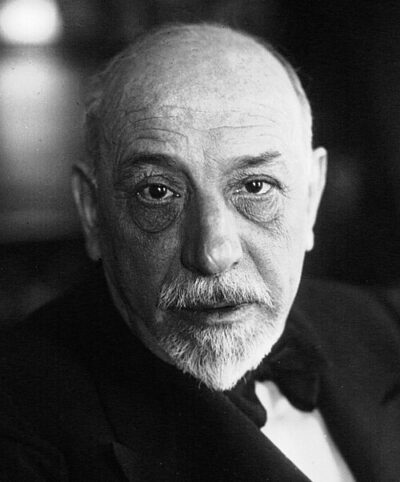
Picture: Pirandello, Luigi, 1867-1936, via Wikimedia Commons · Public domain