Hermite polynomial
Hermite polynomial is a polynomial sequence.
All 3 facts, and where they come from
Facts
3 facts · 0 confirmed by two sources · 0 cited · 3 from one source
Where this comes from
Papalocal keeps its own record. It started from these sources; what each one said is kept here as it was copied, so a change on their side never changes this page by itself. Tap one to read its version.
What Wikidata says · copied November 17, 2026 · revision 2497549675
- Described as
- polynomial sequence
- Other names
- Hermite polynomials, physicists' Hermite polynomials
- What it is
- special function; mathematical concept
- Named after
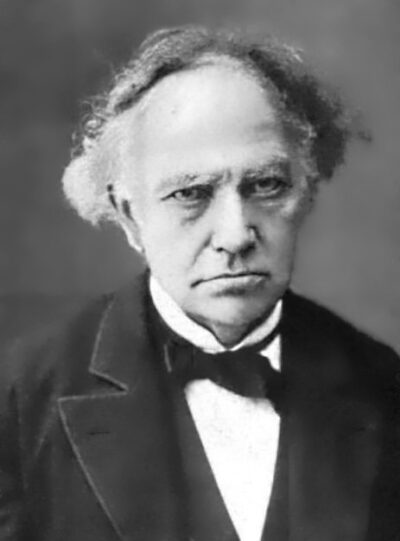
- Charles Hermite
- Wikipedias with a page
- 31
Wikidata item Q658574 (wikidata.org/wiki/Q658574), public domain (CC0). Copied 2026-11-17.
What Wikipedia says · copied November 17, 2026 · revision 1384722909
In mathematics, the Hermite polynomials are a classical orthogonal polynomial sequence.
The polynomials arise in:signal processing as Hermitian wavelets for wavelet transform analysis
probability, such as the Edgeworth series, as well as in connection with Brownian motion;
combinatorics, as an example of an Appell sequence, obeying the umbral calculus;
numerical analysis as Gaussian quadrature;
physics, where they give rise to the eigenstates of the quantum harmonic oscillator; and they also occur in some cases of the heat equation (when the term xux is present);
systems theory in connection with nonlinear operations on Gaussian noise.
random matrix theory in Gaussian ensembles.
Hermite polynomials were defined by Pierre-Simon Laplace in 1810, though in scarcely recognizable form, and studied in detail by Pafnuty Chebyshev in 1859. Chebyshev's work was overlooked, and they were named later after Charles Hermite, who wrote on the polynomials in 1864, describing them as new. They were not new, although Hermite was the first to define the multidimensional polynomials.
From the Wikipedia article “Hermite polynomials” (en.wikipedia.org/wiki/Hermite_polynomials), by its contributors, under CC BY-SA 4.0 (creativecommons.org/licenses/by-sa/4.0/). Copied 2026-11-17; not changed.
Confirmed Two sources agree. Cited One source, and it names where it got it. One source One source, without a reference of its own. Sources disagree The sources disagree. We show the best-supported value and keep theirs below.