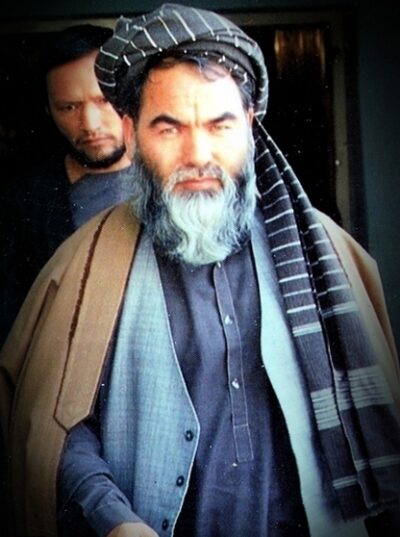
Hezbe Wahdat
Hezbe Wahdat is an Afghan political party. It was founded in 1989 by Abdul-Ali Mazari. Its headquarters are in Kabul. It stands for Shia Islam.
- Country
- Afghanistan
- Founded
- 1989
- Ideology
- Shia Islam
- Chair
- Karim Khalili
All 8 facts, and where they come from
Facts
8 facts · 0 confirmed by two sources · 0 cited · 8 from one source
Where this comes from
Papalocal keeps its own record. It started from these sources; what each one said is kept here as it was copied, so a change on their side never changes this page by itself. Tap one to read its version.
What Wikidata says · copied November 18, 2026 · revision 2458603288
- Described as
- Afghan political party
- Other names
- Islamic Unity Party of Afghanistan
- What it is
- political party
- Founded
- 1989
- Founded by
- Abdul-Ali Mazari
- Headquarters
- Kabul
- Country
- Afghanistan
- Chair
- Karim Khalili · 1 reference
- Ideology
- Shia Islam
- Official website
- http://www.wahdat.net
- Wikipedias with a page
- 21
Wikidata item Q3135114 (wikidata.org/wiki/Q3135114), public domain (CC0). Copied 2026-11-18.
What Wikipedia says · copied November 18, 2026 · revision 1383041329
The Islamic Unity Party of Afghanistan, shortened to Hizb-i Wahdat, "the Unity Party", is an Afghan political party founded in 1989. Like most contemporary major political parties in Afghanistan, Hezb-e Wahdat is rooted in the turbulent period of the anti-Soviet resistance movements in Afghanistan in the 1980s. It was formed to bring together nine separate and mostly inimical military and ideological groups into a single entity.
During the Second Afghan Civil War, it emerged as one of the major actors in Kabul and some other parts of the country with support from Iran. Political Shia Islamism was the ideology of most of its key leaders, but the party gradually tilted towards its Hazara ethnic support base and became the key vehicle of the community's political demands and aspirations. Its ideological background and ethnic support base has continuously shaped its character and political agenda. Through the anti-Soviet jihad and the civil war, Hezb-e Wahdat accumulated significant political capital among Afghanistan's Hazaras.
By 2009, however, Hezb-e Wahdat was so fragmented and divided that the political weight it carried in the country bore little resemblance to what it had once been. It had fragmented into at least four competing organizations, each claiming ownership of the name and legacy of Hezb-e Wahdat.
From the Wikipedia article “Hezbe Wahdat” (en.wikipedia.org/wiki/Hezbe_Wahdat), by its contributors, under CC BY-SA 4.0 (creativecommons.org/licenses/by-sa/4.0/). Copied 2026-11-18; not changed.
Confirmed Two sources agree. Cited One source, and it names where it got it. One source One source, without a reference of its own. Sources disagree The sources disagree. We show the best-supported value and keep theirs below.