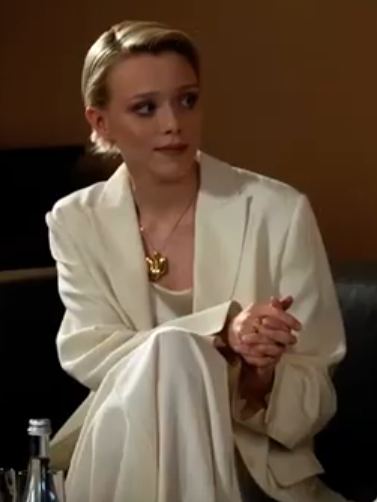
High Fidelity
High Fidelity is a TV series. It came out in 2020. It stars Zoë Kravitz, Jake Lacy and Da'Vine Joy Randolph.
- Released
- February 14, 2020
- Genre
- romantic comedy
- Country of origin
- United States
All 11 facts, and where they come from
Facts
11 facts · 0 confirmed by two sources · 0 cited · 11 from one source
Where this comes from
Papalocal keeps its own record. It started from these sources; what each one said is kept here as it was copied, so a change on their side never changes this page by itself. Tap one to read its version.
What Wikidata says · copied November 17, 2026 · revision 2561331746
- Described as
- TV series
- What it is
- television series
- Starring
- Zoë Kravitz; Jake Lacy; Da'Vine Joy Randolph; David H. Holmes; Ivanna Sakhno · 1 reference
- Genre
- romantic comedy · 1 reference
- Released
- February 14, 2020
- Country of origin
- United States
- Based on
- High Fidelity
- Official website
- https://www.hulu.com/series/high-fidelity-52cb09be-ccc9-4eb4-9db8-f00b0443b2f5 · 1 reference
- Wikipedias with a page
- 10
Wikidata item Q83961623 (wikidata.org/wiki/Q83961623), public domain (CC0). Copied 2026-11-17.
What Wikipedia says · copied November 17, 2026 · revision 1377470263
High Fidelity is an American romantic comedy television series developed by Veronica West and Sarah Kucserka for Hulu. Based on the 1995 novel of the same name by Nick Hornby and its 2000 film adaptation, it stars Zoë Kravitz (whose mother Lisa Bonet appears in the original film) as Robyn "Rob" Brooks, a young record store owner who revisits her past relationships through music and popular culture.
High Fidelity premiered on Hulu on February 14, 2020, to positive reviews from critics. The series was canceled in August 2020 after one season.
From the Wikipedia article “High Fidelity (TV series)” (en.wikipedia.org/wiki/High_Fidelity_(TV_series)), by its contributors, under CC BY-SA 4.0 (creativecommons.org/licenses/by-sa/4.0/). Copied 2026-11-17; not changed.
Confirmed Two sources agree. Cited One source, and it names where it got it. One source One source, without a reference of its own. Sources disagree The sources disagree. We show the best-supported value and keep theirs below.