
Hilal-i-Imtiaz
Hilal-i-Imtiaz is a second-highest civilian award of Pakistan. It was created in 1957.
- Country
- Pakistan
- Created
- March 19, 1957
All 3 facts, and where they come from
Facts
3 facts · 0 confirmed by two sources · 0 cited · 3 from one source
Where this comes from
Papalocal keeps its own record. It started from these sources; what each one said is kept here as it was copied, so a change on their side never changes this page by itself. Tap one to read its version.
What Wikidata says · copied November 17, 2026 · revision 2562899666
- Described as
- second-highest civilian award of Pakistan
- Other names
- Hilal-e-Imtiaz
- What it is
- award
- Created
- March 19, 1957
- Country
- Pakistan
- Wikipedias with a page
- 10
Wikidata item Q15064344 (wikidata.org/wiki/Q15064344), public domain (CC0). Copied 2026-11-17.
What Wikipedia says · copied November 17, 2026 · revision 1364124034
The Hilal-e-Imtiaz (Urdu: ہلالِ امتیاز, lit. 'Crescent of Excellence'; pronounced [hɪ.lɑː.lɪ ɪm.t̪ɪ.jɑːz]), also spelled as Hilal-i-Imtiaz, is the second-highest (in the order of "Imtiaz") civilian award and honour given to both civilians and military officers of the Pakistan Armed Forces by the Government of Pakistan. It recognises individuals who have made an "especially meritorious contribution to the security or national interests of Pakistan, world peace, cultural or other significant public endeavors". It is a civilian award, and not limited to the citizens of Pakistan.
The honour is restricted to individuals who have made outstanding contributions in their fields that led to international recognition for the state. It is awarded in the fields of literature, arts, sports, medicine and science for civilians. It is announced every year on Independence Day (14 August), and given on Pakistan Day, 23 March, by the President of Pakistan.
For officers in the military, it is given for distinguished service. The first Hilal-e-Imtiaz Military in the history of Pakistan was awarded by PM ZA Bhutto to 4 star General Zia ul Haq after Zia was appointed Chief of the Army in 1976. Initially awarded exclusively to officers reporting directly to the Secretary of Defense, after 1979 it began to be awarded in a new format to officers who were up to two steps removed from the Secretary of Defense, such as Major General or Lieutenant General (Army), Air Vice-Marshals or Air Marshals (Air Force) and Rear-Admiral or Vice-Admiral (Navy, Coast Guard, and Marines). The Parliament's committee for award and recognition services selects the names of individuals and sends their report to the prime minister; on his advice, the president announces the awards in a ceremony that is broadcast by PTV. The award is usually given to individuals, not groups, because the purpose of the award is to recognise the recipients' individual contributions.
The award is a disc of golden jasminum between the five points of a pure gold star. The star has additional bright jasminum; in its centre there is a green emerald with a golden crescent.
A special grade of the medal has a larger execution of the same medal design worn as a star on the left of the chest. In addition, it is worn as a sash on the right shoulder, with its rosette (yellow with white for civilians and green for military officers) and white and yellow edge bearing the central disc of the medal at its centre, resting on the left hip. At the ceremony, both medals can be worn at the same time according to their achievements. The medal is suspended on a dark green ribbon with a light yellow and white central stripe and white edge stripes.
Military officers who receive the award are given a Non-Prohibited Bore Arms License.
From the Wikipedia article “Hilal-e-Imtiaz” (en.wikipedia.org/wiki/Hilal-e-Imtiaz), by its contributors, under CC BY-SA 4.0 (creativecommons.org/licenses/by-sa/4.0/). Copied 2026-11-17; not changed.
Confirmed Two sources agree. Cited One source, and it names where it got it. One source One source, without a reference of its own. Sources disagree The sources disagree. We show the best-supported value and keep theirs below.
People connected 5
Won it
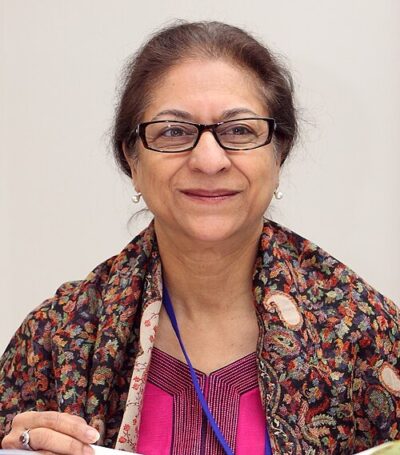 Asma Jahangir (2010)Pakistani human rights activist and lawyer (1952–2018)
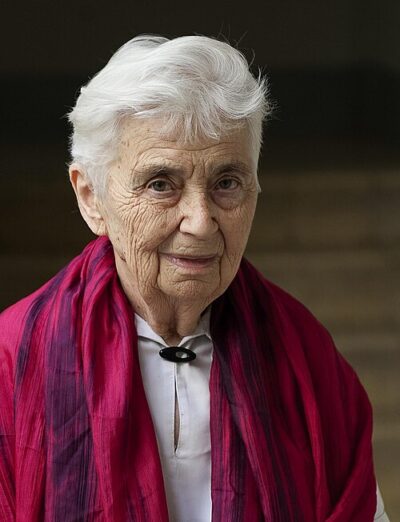 Ruth Pfau (1979)German-Pakistani physician and Catholic nun (1929–2017)
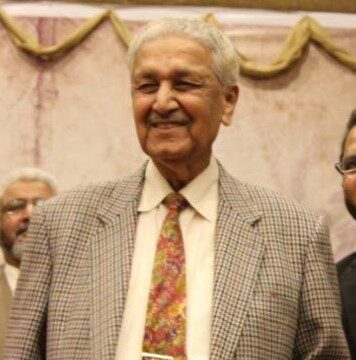 Abdul Qadeer KhanPakistani nuclear engineer (1936–2021)
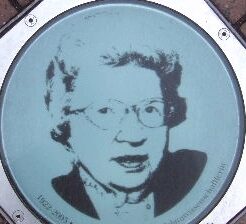 Annemarie SchimmelGerman scholar of Islam (1922-2003)
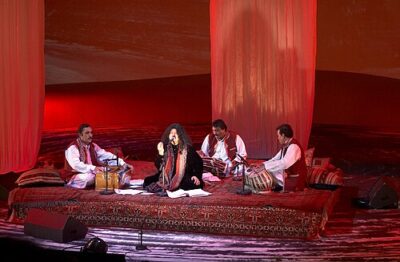 Abida ParveenPakistani Sufi Muslim singer, composer and musician
