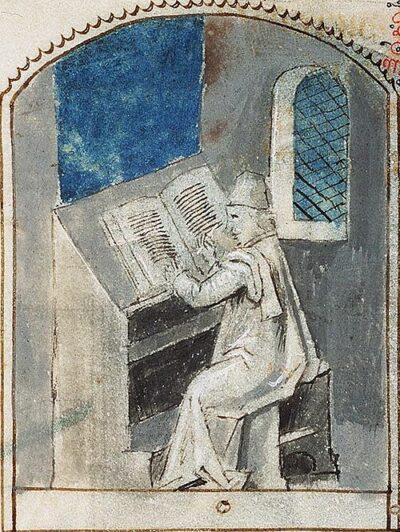
Historia scholastica
Historia scholastica is a twelfth-century Biblical paraphrase by Petrus Comestor. It came out in 1173.
- Published
- 1173
- Written by
- Petrus Comestor
- Genre
- biblical literature
All 5 facts, and where they come from
Facts
5 facts · 0 confirmed by two sources · 0 cited · 5 from one source
Where this comes from
Papalocal keeps its own record. It started from these sources; what each one said is kept here as it was copied, so a change on their side never changes this page by itself. Tap one to read its version.
What Wikidata says · copied November 19, 2026 · revision 2480153033
- Described as
- twelfth-century Biblical paraphrase by Petrus Comestor
- What it is
- literary work
- Written by
- Petrus Comestor
- Genre
- biblical literature
- Published
- 1173
- Language
- medieval Latin
- Wikipedias with a page
- 6
Wikidata item Q3074893 (wikidata.org/wiki/Q3074893), public domain (CC0). Copied 2026-11-19.
What Wikipedia says · copied November 19, 2026 · revision 1385983314
The Historia scholastica (Latin pronunciation: [his'toria sko'lastika]) is a Biblical paraphrase written in Medieval Latin by Petrus Comestor. Completed around 1173, he wrote it for the cathedral school of Notre Dame in Paris. Sometimes called the "Medieval Popular Bible", it draws on the Bible and other sources, including the works of classical scholars and the Fathers of the Church, to present an overview of sacred history.
The Historia scholastica quickly became a school text, a required part of the curriculum at both Paris and Oxford. Preserved in more than 800 manuscripts dated from 1175 to the end of the 15th century, the College of Sorbonne library alone held seventeen copies.
Some years before 1200, Petrus Riga wrote a work called Aurora, a version of the Historia scholastica in verse that served as a sort of Aide-mémoire. Since then, the Historia scholastica served as the base for many redactions, versifications, and translations. The most significant of these include the Chronicle of the World (Weltchronik) by Rudolf von Ems (c.1250, Middle High German), the Rijmbijbel (Rhyming Bible) by Jacob van Maerlant (c. 1271, translation of Aurora into Dutch), and the Bible historiale by Guyart des Moulins (c. 1295, Old French).
The Historia scholastica was among the earliest printed works, with editions appearing c. 1470 in both Strasbourg and Reutlingen.
From the Wikipedia article “Historia scholastica” (en.wikipedia.org/wiki/Historia_scholastica), by its contributors, under CC BY-SA 4.0 (creativecommons.org/licenses/by-sa/4.0/). Copied 2026-11-19; not changed.
Confirmed Two sources agree. Cited One source, and it names where it got it. One source One source, without a reference of its own. Sources disagree The sources disagree. We show the best-supported value and keep theirs below.