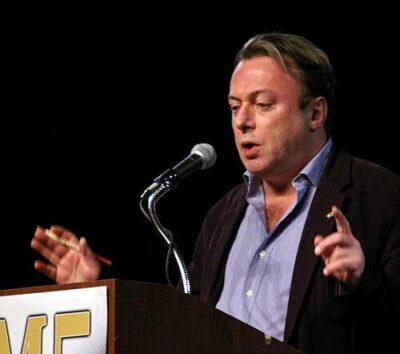
Hitchens' razor
Hitchens' razor is an Epistemological razor regarding the burden of proof.
All 4 facts, and where they come from
Facts
4 facts · 0 confirmed by two sources · 0 cited · 4 from one source
Where this comes from
Papalocal keeps its own record. It started from these sources; what each one said is kept here as it was copied, so a change on their side never changes this page by itself. Tap one to read its version.
What Wikidata says · copied November 16, 2026 · revision 2534848961
- Described as
- Epistemological razor regarding the burden of proof
- Other names
- Hitchens's razor
- What it is
- principle; philosophical razor
- Named after
- Christopher Hitchens; Occam's razor
- Wikipedias with a page
- 30
Wikidata item Q887815 (wikidata.org/wiki/Q887815), public domain (CC0). Copied 2026-11-16.
What Wikipedia says · copied November 16, 2026 · revision 1382258277
Hitchens's razor is a general rule for rejecting certain claims of knowledge. It states:
What can be asserted without evidence can also be dismissed without evidence.
The razor is credited to author and journalist Christopher Hitchens, although its provenance can be traced to the Latin Quod gratis asseritur, gratis negatur ("What is freely asserted is freely denied"). It implies that the burden of proof regarding the truthfulness of a claim lies with the one who makes the claim; if this burden is not met, then the claim is unfounded, and its opponents need not argue further in order to dismiss it. Hitchens used this phrase specifically in the context of refuting religious belief.
From the Wikipedia article “Hitchens's razor” (en.wikipedia.org/wiki/Hitchens's_razor), by its contributors, under CC BY-SA 4.0 (creativecommons.org/licenses/by-sa/4.0/). Copied 2026-11-16; not changed.
Confirmed Two sources agree. Cited One source, and it names where it got it. One source One source, without a reference of its own. Sources disagree The sources disagree. We show the best-supported value and keep theirs below.