Hollywood Victory Committee
The Hollywood Victory Committee is an organization.
- Country
- United States
All 2 facts, and where they come from
Facts
2 facts · 0 confirmed by two sources · 0 cited · 2 from one source
Where this comes from
Papalocal keeps its own record. It started from these sources; what each one said is kept here as it was copied, so a change on their side never changes this page by itself. Tap one to read its version.
What Wikidata says · copied November 16, 2026 · revision 2062881677
- What it is
- organization
- Country
- United States
- Wikipedias with a page
- 2
Wikidata item Q5883013 (wikidata.org/wiki/Q5883013), public domain (CC0). Copied 2026-11-16.
What Wikipedia says · copied November 16, 2026 · revision 1364712057
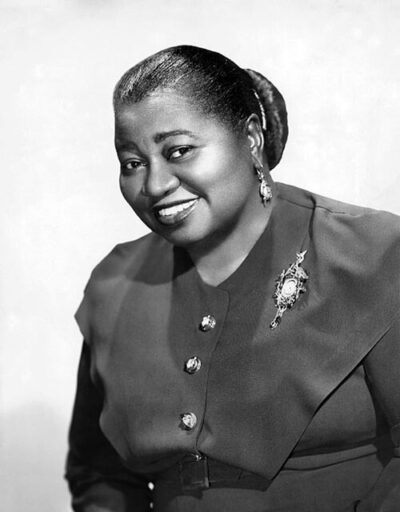
The Hollywood Victory Committee was an organization founded on December 10, 1941, during World War II to provide a means for stage, screen, television and radio performers that were not in military service to contribute to the war effort through bond drives and improving morale for troops. It was associated with the Screen Actors Guild. The Committee organized events between January 1942 until August 1945. Chairmen of the committee included Clark Gable, James Cagney, Sam Levene and George Murphy. Hattie McDaniel was the Chairman of the Negro Division of the Hollywood Victory Committee, providing entertainment for soldiers in hospitals, and those stationed at military bases.
One of the committee's most notable successes was the Hollywood Victory Caravan which crossed the country in April / May 1942.
Within its four years, arranged for stars to travel five million miles to entertain soldiers. The committee's final report took credit for providing 56,037 free appearances by 4,147 persons in 7,700 events, including 13,555 playing days by 176 persons on 122 overseas tours.
The Hollywood Victory Committee organized Hollywood stars to headline many of the variety, dramatic, and musical shows provided by the USO Camp Tours. The shows were originally organized under great secrecy and sent initially to the British Isles to entertain American troops stationed there. Entertainers would eventually travel to most battle fields to provide entertainment to active duty soldiers.
Radio broadcasts were a very important part of this entertainment since radio could reach millions of people quickly and many stars were recruited to help get out important messages on buying bonds, saving salvage scrap, or raising funds for charity. Using the top names in entertainment to make the announcements elevated participation and public reception of the projects. There were many requests for programs, sometimes as many as five in one week, and all were met. Hollywood stars were even furnished to Canada to promote the sale of Canadian Victory Bonds.
One very popular program organized by the Hollywood Victory Committee was the broadcast of Command Performance. This program was not heard by American civilians but broadcast by short-wave radio to America's fighting forces on all battle fronts. The American soldiers sent in requests for what wanted on these broadcasts and the Hollywood Victory Committee worked to furnish the Hollywood stars. Major General A.D. Surles, Director of the War Department Bureau of Public Relations, said that the troops "sit with ears glued to the radio every Sunday." Surles also wrote, "it may be seen that your efforts on our behalf and the many services rendered to us by you and the stars of the screen, stage and radio are not only doing a tremendous job in the entertainment of our men in service abroad, but are doing an equally important job in building goodwill for our country with international audience."
From the Wikipedia article “Hollywood Victory Committee” (en.wikipedia.org/wiki/Hollywood_Victory_Committee), by its contributors, under CC BY-SA 4.0 (creativecommons.org/licenses/by-sa/4.0/). Copied 2026-11-16; not changed.
Confirmed Two sources agree. Cited One source, and it names where it got it. One source One source, without a reference of its own. Sources disagree The sources disagree. We show the best-supported value and keep theirs below.