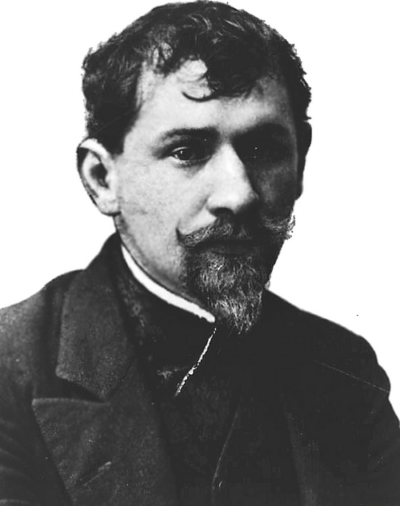
Homo sapiens
Homo sapiens is a novel trilogy by Stanisław Przybyszewski. It came out in 1895.
- Published
- 1895
- Written by
- Stanisław Przybyszewski
- Country of origin
- Germany
All 7 facts, and where they come from
Facts
7 facts · 0 confirmed by two sources · 0 cited · 7 from one source
Where this comes from
Papalocal keeps its own record. It started from these sources; what each one said is kept here as it was copied, so a change on their side never changes this page by itself. Tap one to read its version.
What Wikidata says · copied November 17, 2026 · revision 2400033184
- Described as
- novel trilogy by Stanisław Przybyszewski
- What it is
- literary work; literary trilogy; novel series
- Written by
- Stanisław Przybyszewski
- Published
- 1895
- Language
- German
- Country of origin
- Germany
- Wikipedias with a page
- 1
Wikidata item Q5891010 (wikidata.org/wiki/Q5891010), public domain (CC0). Copied 2026-11-17.
What Wikipedia says · copied November 17, 2026 · revision 1384367250
Homo Sapiens (1895–96; tr. 1915 by Thomas Seltzer) is a trilogy by Polish author Stanisław Przybyszewski. The novels were originally published in German as Über Bord (1896, "Overboard"), Unterwegs (1895, "By the Way") and Im Malstrom (1895, "In the Maelstrom"). It deals with the question of deviance and sexuality, and is counted among Przybyszewski's most important and best-known works. It was well received in Germany, but withdrawn from sale by its U.S. publisher after being labelled obscene. It is associated with the decadent movement of the late 19th century.
From the Wikipedia article “Homo sapiens (novel)” (en.wikipedia.org/wiki/Homo_sapiens_(novel)), by its contributors, under CC BY-SA 4.0 (creativecommons.org/licenses/by-sa/4.0/). Copied 2026-11-17; not changed.
Confirmed Two sources agree. Cited One source, and it names where it got it. One source One source, without a reference of its own. Sources disagree The sources disagree. We show the best-supported value and keep theirs below.