House of Leaves
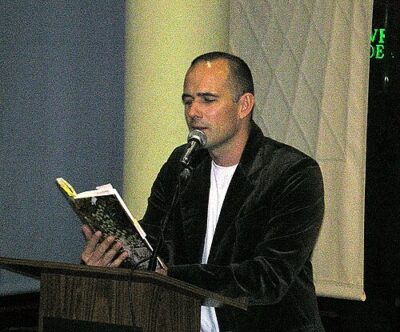
House of Leaves is a 2000 novel by Mark Z. Danielewski.
- Published
- March 7, 2000
- Written by
- Mark Z. Danielewski
- Genre
- epistolary fiction
- Country of origin
- United States
All 12 facts, and where they come from
Facts
12 facts · 0 confirmed by two sources · 2 cited · 10 from one source
Where this comes from
Papalocal keeps its own record. It started from these sources; what each one said is kept here as it was copied, so a change on their side never changes this page by itself. Tap one to read its version.
What Wikidata says · copied November 17, 2026 · revision 2555914876
- Described as
- 2000 novel by Mark Z. Danielewski
- What it is
- literary work
- Written by
- Mark Z. Danielewski · 2 references
- Publisher
- Pantheon Books; Random House
- Genre
- epistolary fiction; metafiction; ergodic literature; horror fiction
- Published
- March 7, 2000 · 1 reference
- Language
- English
- Country of origin
- United States
- Followed by
- The Whalestoe Letters
- Wikipedias with a page
- 15
Wikidata item Q521688 (wikidata.org/wiki/Q521688), public domain (CC0). Copied 2026-11-17.
What Wikipedia says · copied November 17, 2026 · revision 1385403684
House of Leaves (stylized with "House" in blue) is the debut novel by American author Mark Z. Danielewski, published in March 2000 by Pantheon Books. A bestseller, it has been translated into a number of languages, and is followed by a companion piece, The Whalestoe Letters.
The novel is written as a work of epistolary fiction and metafiction focusing on a fictional documentary film titled The Navidson Record, presented as a story within a story discussed in a handwritten monograph recovered by the primary narrator, Johnny Truant. The narrative makes heavy use of multiperspectivity as Truant's footnotes chronicle his efforts to transcribe the manuscript, which itself reveals The Navidson Record's supposed narrative through transcriptions and analysis depicting a story of a family who discovers a larger-on-the-inside labyrinth in their house.
House of Leaves maintains an academic publishing format with exhibits, appendices, and an index, as well as numerous footnotes including citations from the original author for nonexistent works, interjections and personal anecdotes from the narrator, and notes from the editors to whom he supposedly sent the work for publication. It is also distinguished by convoluted page layouts: some pages contain only a few words or lines of text, arranged to mirror the events in the story. At points, the book must be rotated to be read, making it a prime example of ergodic literature.
The book is most often described as a horror story, though the author has also endorsed readers' interpretation of it as a love story. House of Leaves has also been described as an encyclopedic novel, or conversely a satire of academia.
From the Wikipedia article “House of Leaves” (en.wikipedia.org/wiki/House_of_Leaves), by its contributors, under CC BY-SA 4.0 (creativecommons.org/licenses/by-sa/4.0/). Copied 2026-11-17; not changed.
Confirmed Two sources agree. Cited One source, and it names where it got it. One source One source, without a reference of its own. Sources disagree The sources disagree. We show the best-supported value and keep theirs below.