Hubbert peak theory
Hubbert peak theory is One of the primary theories on peak oil.
All 2 facts, and where they come from
Facts
2 facts · 0 confirmed by two sources · 0 cited · 2 from one source
Where this comes from
Papalocal keeps its own record. It started from these sources; what each one said is kept here as it was copied, so a change on their side never changes this page by itself. Tap one to read its version.
What Wikidata says · copied November 17, 2026 · revision 2475699557
- Described as
- One of the primary theories on peak oil
- What it is
- theory
- Named after
- M. King Hubbert
- Wikipedias with a page
- 16
Wikidata item Q1344782 (wikidata.org/wiki/Q1344782), public domain (CC0). Copied 2026-11-17.
What Wikipedia says · copied November 17, 2026 · revision 1385281155
The Hubbert peak theory says that for any given geographical area, from an individual oil-producing region to the planet as a whole, the rate of petroleum production tends to follow a bell-shaped curve. It is one of the primary theories on peak oil.
Choosing a particular curve determines a point of maximum production based on discovery rates, production rates, and cumulative production. Early in the curve (pre-peak), the production rate increases due to the discovery rate and the addition of infrastructure. Late in the curve (post-peak), production declines because of resource depletion.
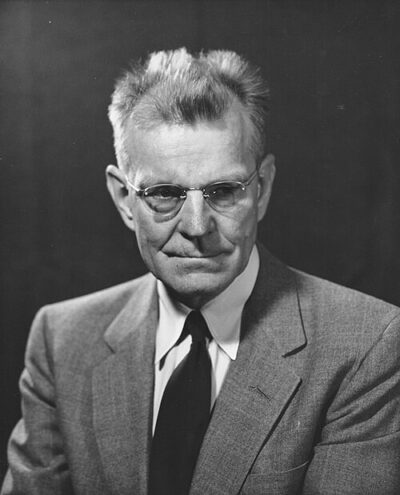
The Hubbert peak theory is based on the observation that the amount of oil under the ground in any region is finite; therefore, the rate of discovery, which initially increases quickly, must reach a maximum and then decline. In the US, oil extraction followed the discovery curve after a time lag of 32 to 35 years. The theory is named after American geophysicist M. King Hubbert, who created a method of modeling the production curve given an assumed ultimate recovery volume.
From the Wikipedia article “Hubbert peak theory” (en.wikipedia.org/wiki/Hubbert_peak_theory), by its contributors, under CC BY-SA 4.0 (creativecommons.org/licenses/by-sa/4.0/). Copied 2026-11-17; not changed.
Confirmed Two sources agree. Cited One source, and it names where it got it. One source One source, without a reference of its own. Sources disagree The sources disagree. We show the best-supported value and keep theirs below.