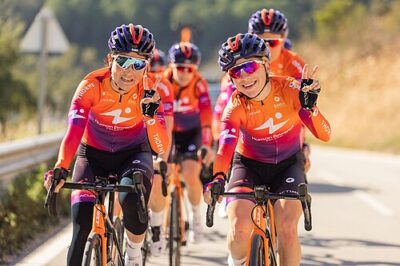
Human Powered Health Women
Human Powered Health Women is a United States women's cycling team. It was founded in 2012. Its headquarters are in Minneapolis.
- Sport
- road bicycle racing
- Founded
- 2012
All 8 facts, and where they come from
Facts
8 facts · 0 confirmed by two sources · 0 cited · 8 from one source
Where this comes from
Papalocal keeps its own record. It started from these sources; what each one said is kept here as it was copied, so a change on their side never changes this page by itself. Tap one to read its version.
What Wikidata says · copied November 17, 2026 · revision 2475318363
- Described as
- United States women's cycling team
- Other names
- Optum-Kelly Benefit Strategies, Rally UHC Women, Rally Cycling Women
- What it is
- amateur cycling team (2012); UCI Women's Team (2013–2019); UCI Women's Continental Team (2020–2021)
- Founded
- 2012
- Headquarters
- Minneapolis
- Country
- United States
- Sport
- road bicycle racing
- Official website
- http://www.humanpoweredhealthcycling.com
- Wikipedias with a page
- 11
Wikidata item Q16985323 (wikidata.org/wiki/Q16985323), public domain (CC0). Copied 2026-11-17.
What Wikipedia says · copied November 17, 2026 · revision 1373566447
Human Powered Health (UCI team code: HPH) is a women's professional cycling team founded in 2012 which currently competes in the UCI Women's World Tour. In 2022, Human Powered Health became the first co-educational professional cycling team to promote its women's team to the WorldTour level ahead of its men's program.
The team was founded as Optum-Kelly Benefit Strategies and was initially directed by Rachel Heal. The team's current sports directors are Joanne Kiesanowski and Andrew Bajadali.
The team is sponsored by Human Powered Health, a subsidiary of American healthcare services provider Optum.
From the Wikipedia article “Human Powered Health (women's team)” (en.wikipedia.org/wiki/Human_Powered_Health_(women's_team)), by its contributors, under CC BY-SA 4.0 (creativecommons.org/licenses/by-sa/4.0/). Copied 2026-11-17; not changed.
Confirmed Two sources agree. Cited One source, and it names where it got it. One source One source, without a reference of its own. Sources disagree The sources disagree. We show the best-supported value and keep theirs below.
Picture: Sirbikesalot, via Wikimedia Commons · CC BY-SA 4.0