Hungarian State Opera House
Hungarian State Opera House is a Neo-Renaissance opera house in Budapest. It came out in 1884.
- Came out
- 1884
All 5 facts, and where they come from
Facts
5 facts · 0 confirmed by two sources · 3 cited · 2 from one source
Where this comes from
Papalocal keeps its own record. It started from these sources; what each one said is kept here as it was copied, so a change on their side never changes this page by itself. Tap one to read its version.
What Wikidata says · copied November 18, 2026 · revision 2568005985
- Described as
- Neo-Renaissance opera house in Budapest
- Other names
- Hungarian Royal Opera House
- What it is
- opera house · 1 reference
- Came out
- 1884 · 1 reference
- Located in
- Budapest District VI · 1 reference
- Country
- Hungary · 1 reference
- Official website
- https://www.opera.hu/
- Wikipedias with a page
- 40
Wikidata item Q36833 (wikidata.org/wiki/Q36833), public domain (CC0). Copied 2026-11-18.
What Wikipedia says · copied November 18, 2026 · revision 1382305088
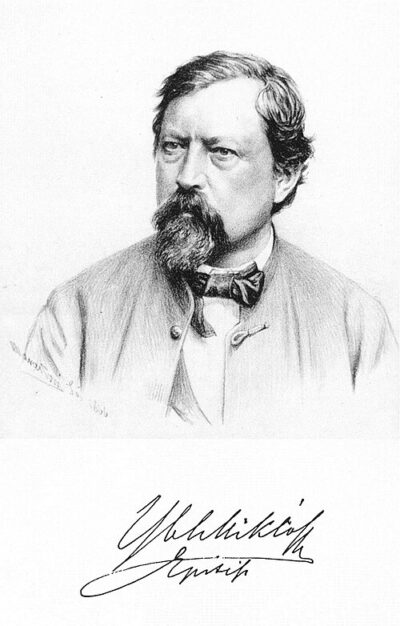
The Hungarian State Opera House (Hungarian: Magyar Állami Operaház [ˈmɒɟɒr ˈaːlːɒmi ˈopɛrɒɦaːz]) is a historic opera house located in central Budapest, on Andrássy avenue. Originally known as the Hungarian Royal Opera House, it was designed by Miklós Ybl, a major figure of 19th-century Hungarian architecture. Construction began in 1875, funded by the city of Budapest and by Emperor Franz Joseph I of Austria-Hungary, and the new house opened to the public on the 27 September 1884. Before the closure of the "Népszínház" in Budapest, it was the third largest opera building in the city; today it is the second largest opera house in Budapest and in Hungary.
Touring groups had performed operas in the city from the early 19th century, but as Legány notes, "a new epoch began after 1835 when part of the Kasa National Opera and Theatrical Troupe arrived in Buda". They took over the Castle Theatre and, in 1835, were joined by another part of the troupe, after which performances of operas were given under conductor Ferenc Erkel. By 1837 they had established themselves at the Magyar Színház (Hungarian Theatre) and by 1840, it had become the "Nemzeti Színház" (National Theatre). Upon its completion, the opera section moved into the Hungarian Royal Opera House, with performances quickly gaining a reputation for excellence in a repertory of about 45 to 50 operas and about 130 annual performances.
Today, the opera house is home to the Budapest Opera Ball, a society event dating back to 1886.
From the Wikipedia article “Hungarian State Opera House” (en.wikipedia.org/wiki/Hungarian_State_Opera_House), by its contributors, under CC BY-SA 4.0 (creativecommons.org/licenses/by-sa/4.0/). Copied 2026-11-18; not changed.
Confirmed Two sources agree. Cited One source, and it names where it got it. One source One source, without a reference of its own. Sources disagree The sources disagree. We show the best-supported value and keep theirs below.
Picture: Wikimedia Commons: Hungarian State Opera House in Budapest.jpg · See Commons file page