
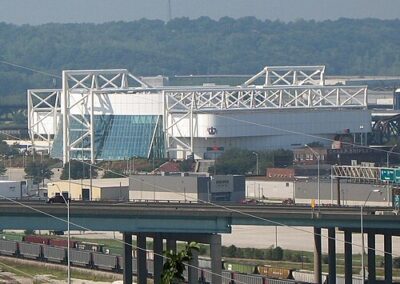
Hy-Vee Arena
Hy-Vee Arena is an architectural structure.
All 6 facts, and where they come from
Facts
6 facts · 0 confirmed by two sources · 2 cited · 4 from one source
Where this comes from
Papalocal keeps its own record. It started from these sources; what each one said is kept here as it was copied, so a change on their side never changes this page by itself. Tap one to read its version.
What Wikidata says · copied November 17, 2026 · revision 2540531870
- Described as
- architectural structure
- Other names
- Kemper Arena
- What it is
- arena
- Located in
- Kansas City · 1 reference
- Country
- United States · 1 reference
- Owned by
- Kansas City
- Sport
- basketball
- Official website
- https://hyveearena.com
- Wikipedias with a page
- 10
Wikidata item Q1489399 (wikidata.org/wiki/Q1489399), public domain (CC0). Copied 2026-11-17.
What Wikipedia says · copied November 17, 2026 · revision 1377650000
Hy-Vee Arena, previously known as Kemper Arena, is an indoor arena located in Kansas City, Missouri. Prior to conversion to a youth sports and community gymnasium facility, Kemper Arena was previously a 19,500-seat professional sports arena. It has hosted NCAA Final Four basketball games, professional basketball and hockey teams, professional wrestling events, the 1976 Republican National Convention, concerts, and is the ongoing host of the American Royal livestock show.
It was originally named for Rufus Crosby Kemper Sr., a member of the powerful Kemper financial clan and who donated $3.2 million from his estate for the arena. In 2016, it was listed on the National Register of Historic Places in recognition of its revolutionary design by Helmut Jahn.
From the Wikipedia article “Hy-Vee Arena” (en.wikipedia.org/wiki/Hy-Vee_Arena), by its contributors, under CC BY-SA 4.0 (creativecommons.org/licenses/by-sa/4.0/). Copied 2026-11-17; not changed.
Confirmed Two sources agree. Cited One source, and it names where it got it. One source One source, without a reference of its own. Sources disagree The sources disagree. We show the best-supported value and keep theirs below.
Picture: Wikimedia Commons · CC BY-SA 2.5
