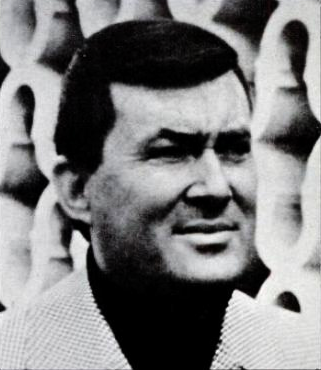
I Can't Stop Loving You
I Can't Stop Loving You is a song written and composed by Don Gibson, originally recorded by Don Gibson and released in 1957. It came out in 1958. It is performed by Ray Charles and Larz-Kristerz.
- Released
- February 7, 1958
- Performed by
- Don Gibson
- Genre
- popular music
All 10 facts, and where they come from
Facts
10 facts · 0 confirmed by two sources · 1 cited · 9 from one source
Where this comes from
Papalocal keeps its own record. It started from these sources; what each one said is kept here as it was copied, so a change on their side never changes this page by itself. Tap one to read its version.
What Wikidata says · copied November 19, 2026 · revision 2569267145
- Described as
- song written and composed by Don Gibson, originally recorded by Don Gibson and released in 1957
- Other names
- I Can't Stop Lovin' You
- What it is
- musical work/composition
- Performed by
- Don Gibson; Ray Charles; Larz-Kristerz; Streaplers
- Music by
- Don Gibson · 1 reference
- Publisher
- Acuff-Rose Publications, Inc.
- Genre
- popular music
- Released
- February 7, 1958
- Language
- English
- Wikipedias with a page
- 12
Wikidata item Q1228847 (wikidata.org/wiki/Q1228847), public domain (CC0). Copied 2026-11-19.
What Wikipedia says · copied November 19, 2026 · revision 1384761970
"I Can't Stop Loving You" is a popular song written and composed by country musician Don Gibson from his 1958 album Oh Lonesome Me, who first recorded it on December 3, 1957, for RCA Victor Records. It was released in 1958 as the B-side of "Oh Lonesome Me", becoming a double-sided country hit single. At the time of Gibson's death in 2003, the song had been recorded by more than 700 artists, most notably by Ray Charles, whose recording reached number one on the Billboard Hot 100 chart.
From the Wikipedia article “I Can't Stop Loving You” (en.wikipedia.org/wiki/I_Can't_Stop_Loving_You), by its contributors, under CC BY-SA 4.0 (creativecommons.org/licenses/by-sa/4.0/). Copied 2026-11-19; not changed.
Confirmed Two sources agree. Cited One source, and it names where it got it. One source One source, without a reference of its own. Sources disagree The sources disagree. We show the best-supported value and keep theirs below.