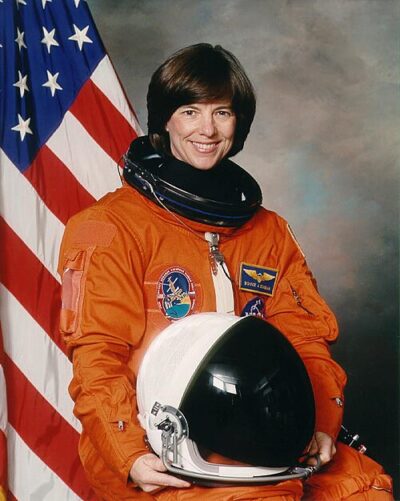
IEEE Judith A. Resnik Award
IEEE Judith A. Resnik Award is an awarded for outstanding contributions to space engineering. It was created in 1989. It is given by the Institute of Electrical and Electronics Engineers.
- Created
- 1989
All 6 facts, and where they come from
Facts
6 facts · 0 confirmed by two sources · 0 cited · 6 from one source
Where this comes from
Papalocal keeps its own record. It started from these sources; what each one said is kept here as it was copied, so a change on their side never changes this page by itself. Tap one to read its version.
What Wikidata says · copied November 17, 2026 · revision 1346315574
- Described as
- awarded for outstanding contributions to space engineering
- What it is
- technical field award; science award
- Created
- 1989
- Given by
- Institute of Electrical and Electronics Engineers · 1 reference
- Named after
- Judith Resnik
- Official website
- http://www.ieee.org/about/awards/tfas/resnik.html
- Wikipedias with a page
- 2
Wikidata item Q5970408 (wikidata.org/wiki/Q5970408), public domain (CC0). Copied 2026-11-17.
What Wikipedia says · copied November 17, 2026 · revision 1386199342
The IEEE Judith A. Resnik Award is a technical field award presented by the Institute of Electrical and Electronics Engineers (IEEE) to either an individual, or a team, "for outstanding contributions to space engineering within the fields of interest of the IEEE".
The award is named in honor of Judith A. Resnik, a mission specialist, killed when the Space Shuttle Challenger disintegrated during launch in January 1986 and was established later that year. Recipients receive a bronze medal, certificate, and honorarium.
Through 2012, the IEEE administered the award process. The IEEE Aerospace and Electronic Systems Society assumed administration of the award starting in 2015.
From the Wikipedia article “IEEE Judith A. Resnik Award” (en.wikipedia.org/wiki/IEEE_Judith_A._Resnik_Award), by its contributors, under CC BY-SA 4.0 (creativecommons.org/licenses/by-sa/4.0/). Copied 2026-11-17; not changed.
Confirmed Two sources agree. Cited One source, and it names where it got it. One source One source, without a reference of its own. Sources disagree The sources disagree. We show the best-supported value and keep theirs below.