Ihr Kinderlein
Ihr Kinderlein is a German Christmas carol.
- Genre
- Christmas carol
All 4 facts, and where they come from
Facts
4 facts · 0 confirmed by two sources · 1 cited · 3 from one source
Where this comes from
Papalocal keeps its own record. It started from these sources; what each one said is kept here as it was copied, so a change on their side never changes this page by itself. Tap one to read its version.
What Wikidata says · copied November 17, 2026 · revision 2550196833
- Described as
- German Christmas carol
- What it is
- Christian hymn
- Music by
- Johann Abraham Peter Schulz · 1 reference
- Genre
- Christmas carol
- Language
- German
- Wikipedias with a page
- 11
Wikidata item Q457952 (wikidata.org/wiki/Q457952), public domain (CC0). Copied 2026-11-17.
What Wikipedia says · copied November 17, 2026 · revision 1379321068
"Ihr Kinderlein, kommet" ("Oh, come, little children") is a German Christmas carol.
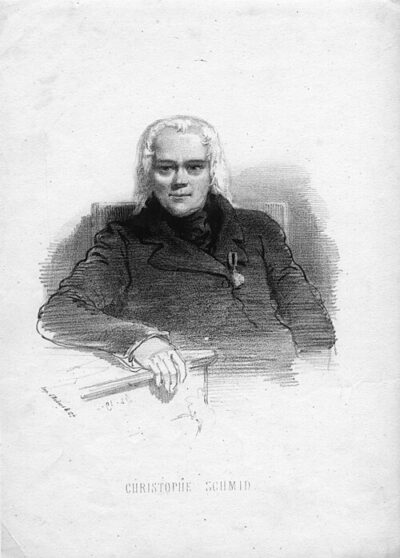
The lyrics were written by Catholic priest and writer Christoph von Schmid in 1798. His poem "Die Kinder bei der Krippe" (The children at the manger) had originally eight verses and was first published in 1811. Schmid then included it in his 1818 collection Blüten dem blühenden Alter gewidmet (Flowers dedicated to the flowering age). Together with other poems from this collection, it was then set to music by Franz Xaver Luft in 1837.
The music to the poem as it is known today was written by the composer Johann Abraham Peter Schulz in 1794 as a secular song named "Wie reizend, wie wonnig" (How charming, how pleasant). Around 1832, this melody was first published with Schmid's poem in a collection Sechzig deutsche Lieder für dreißig Pfennig (Sixty German songs for thirty pennies) by Friedrich Eickhoff (1807–1886). This collection was later printed in large numbers by the just founded (1835) C. Bertelsmann Verlag.
From the Wikipedia article “Ihr Kinderlein, kommet” (en.wikipedia.org/wiki/Ihr_Kinderlein,_kommet), by its contributors, under CC BY-SA 4.0 (creativecommons.org/licenses/by-sa/4.0/). Copied 2026-11-17; not changed.
Confirmed Two sources agree. Cited One source, and it names where it got it. One source One source, without a reference of its own. Sources disagree The sources disagree. We show the best-supported value and keep theirs below.