Il turco in Italia
Il turco in Italia is an opera by Gioachino Rossini. It came out in 1814.
- Released
- 1814
- Genre
- opera buffa
- Country of origin
- Italy
All 6 facts, and where they come from
Facts
6 facts · 0 confirmed by two sources · 3 cited · 3 from one source
Where this comes from
Papalocal keeps its own record. It started from these sources; what each one said is kept here as it was copied, so a change on their side never changes this page by itself. Tap one to read its version.
What Wikidata says · copied November 17, 2026 · revision 2455838674
- Described as
- opera by Gioachino Rossini
- Other names
- The Turk in Italy
- What it is
- dramatico-musical work · 1 reference
- Music by
- Gioachino Rossini · 2 references
- Genre
- opera buffa · 2 references
- Released
- 1814
- Language
- Italian
- Country of origin
- Italy
- Wikipedias with a page
- 23
Wikidata item Q477643 (wikidata.org/wiki/Q477643), public domain (CC0). Copied 2026-11-17.
What Wikipedia says · copied November 17, 2026 · revision 1375219970
Il turco in Italia (English: The Turk in Italy) is an opera buffa in two acts by Gioachino Rossini. The Italian-language libretto was written by Felice Romani. It was a re-working of a libretto by Caterino Mazzolà set as an opera (with the same title) by the German composer Franz Seydelmann in 1788.
An opera buffa, it was influenced by Mozart's Così fan tutte, which was performed at the same theatre shortly before Rossini's work. The strangely harmonized overture, though infrequently recorded, is one of the best examples of Rossini's characteristic style. An unusually long introduction displays an extended, melancholy horn solo with full orchestral accompaniment, before giving way to a lively, purely comic main theme.
From the Wikipedia article “Il turco in Italia” (en.wikipedia.org/wiki/Il_turco_in_Italia), by its contributors, under CC BY-SA 4.0 (creativecommons.org/licenses/by-sa/4.0/). Copied 2026-11-17; not changed.
Confirmed Two sources agree. Cited One source, and it names where it got it. One source One source, without a reference of its own. Sources disagree The sources disagree. We show the best-supported value and keep theirs below.
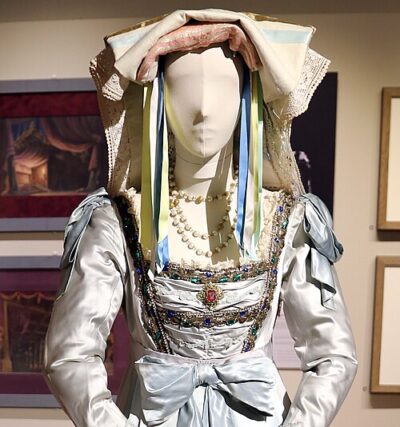
Picture: Sailko, via Wikimedia Commons · CC BY 3.0